






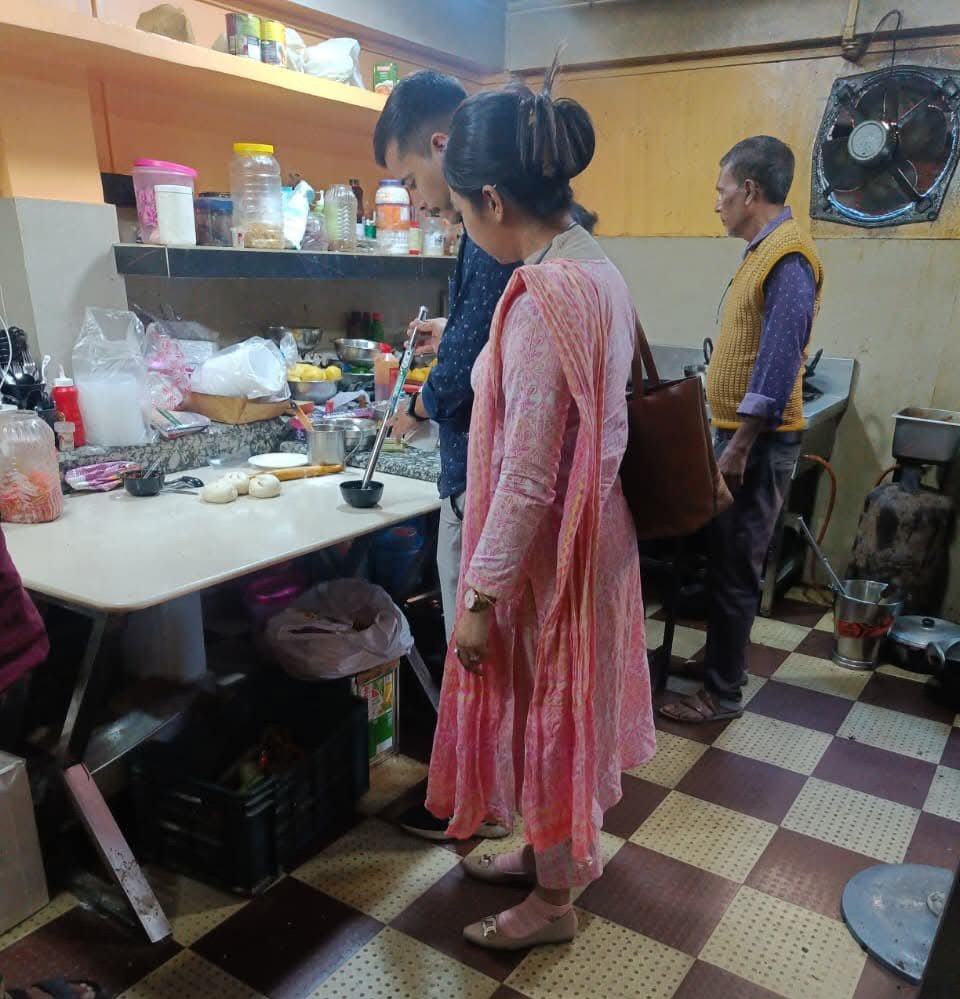
A focused initiative to safeguard public health was launched in Sivasagar town on Monday, as the Food Safety Department, assisted by the Food Safety on Wheels (FSW) mobile unit, conducted a large-scale oil-testing drive. The operation targeted local restaurants to assess the quality of their used cooking oil by measuring levels of Total Polar Compounds (TPC)—a critical marker of oil degradation.
The FSW team, equipped collected 30 samples of used cooking oil from various food business operators throughout the town for quality analysis. High TPC levels indicate excessive oil reuse, which can generate harmful substances and poses a risk to consumer health.
“The quality of cooking oil is paramount to food safety. We have collected a total of 30 distinct samples of used cooking oil from various food establishments. We want to ensure that the oil used for preparing food is not repeatedly reused to the point where it becomes detrimental to public health,” a food safety department official said.

The TPC testing, the drive included briefing sessions for restaurant owners and staff. Operators received detailed guidance on best practices for food handling, preparation, and appropriate storage methods crucial for preventing cross-contamination and food-borne illnesses.
A key instruction was the necessity of segregating raw ingredients. Food business operators were strongly advised to store raw meats and poultry separately from ready-to-eat foods to prevent bacterial transfer.
Furthermore, the department stressed the effective use of the First-In, First-Out (FIFO) method for stock management. This protocol helps to ensure that older inventory is used before new stock, thereby minimising food spoilage, reducing waste, and maintaining the freshness of ingredients served to the public.
The Food Safety Department confirmed that all TPC analysis results will be processed swiftly, and necessary follow-up actions will be determined based on the findings to ensure sustained compliance across Sivasagar’s food sector.