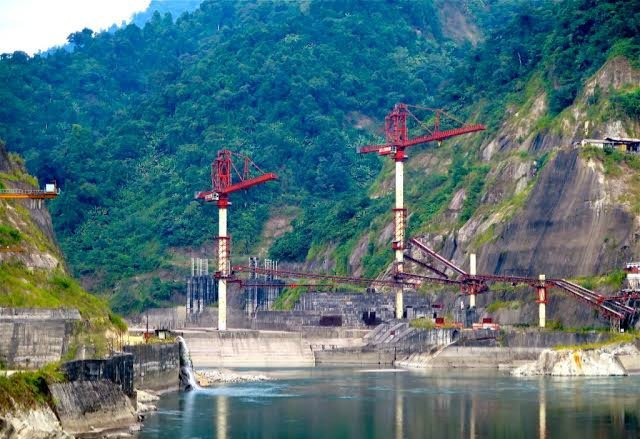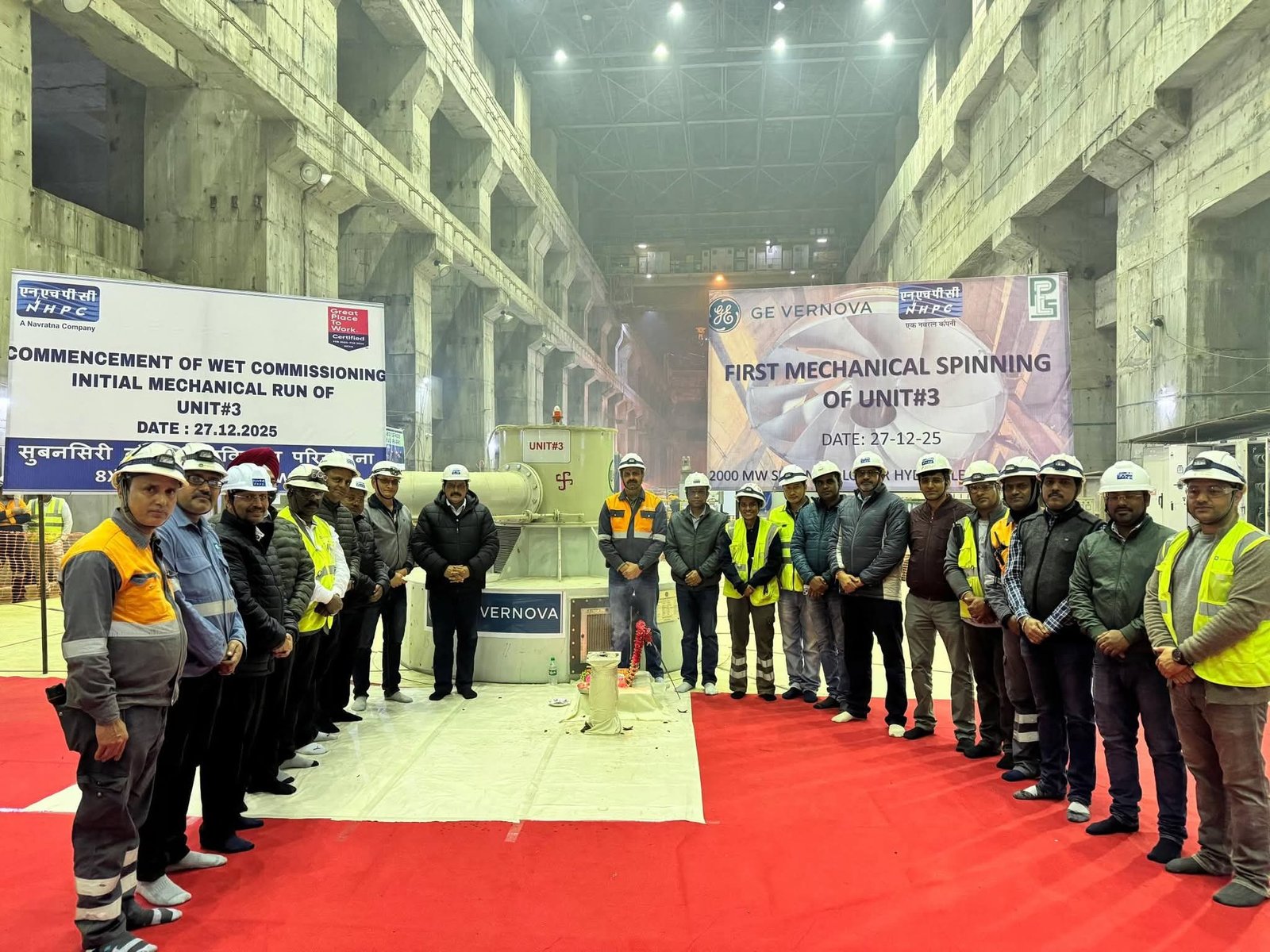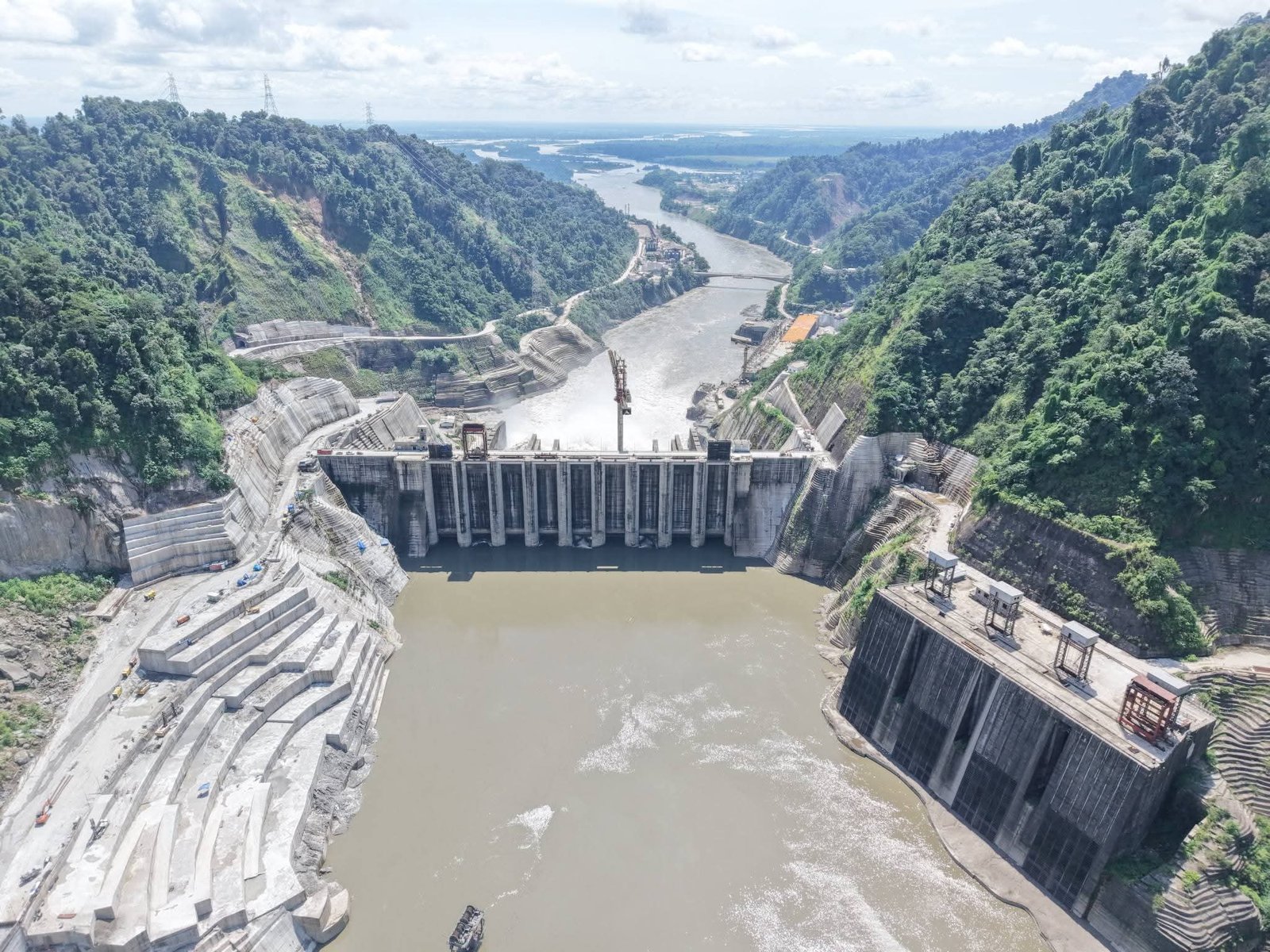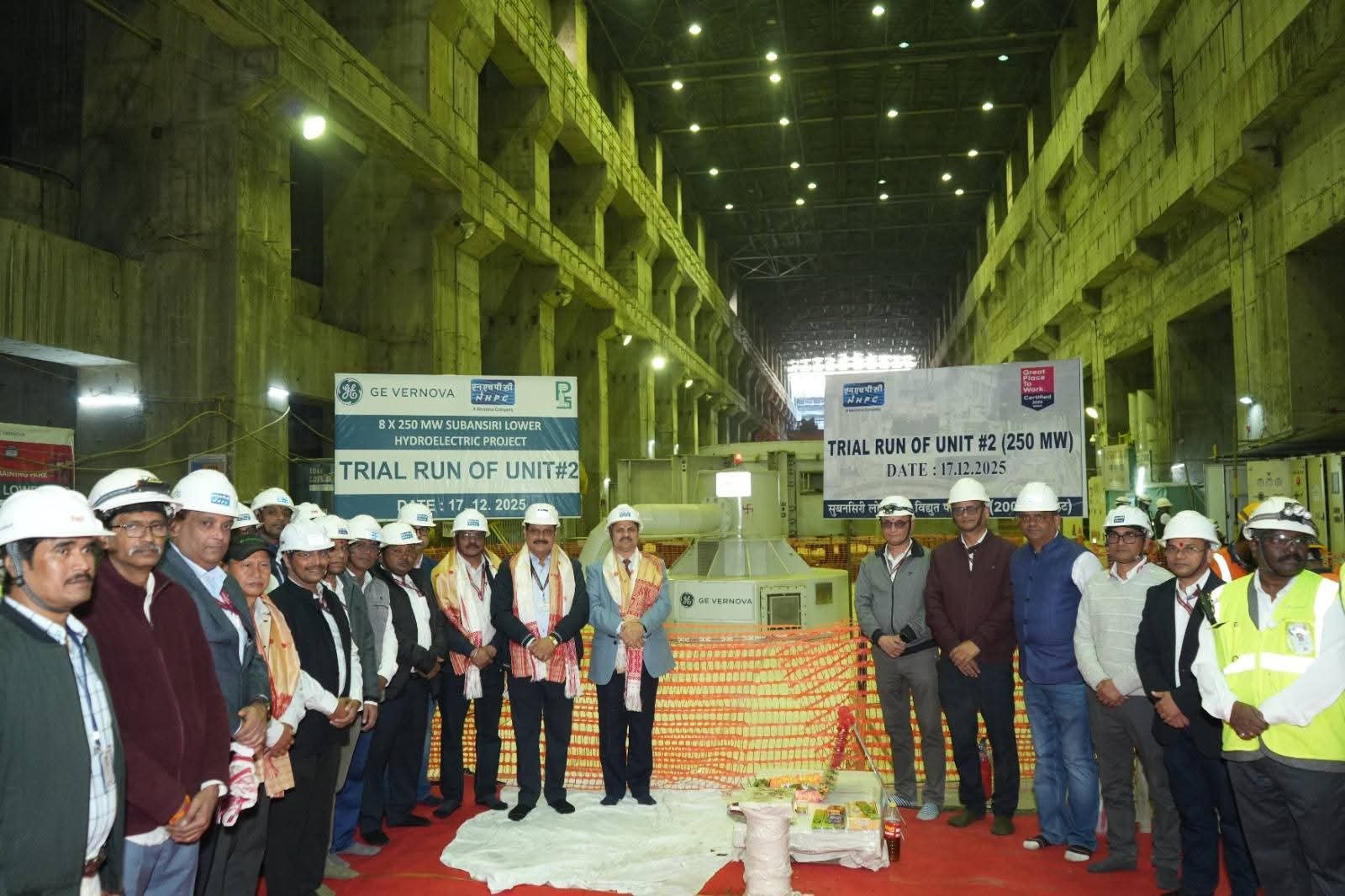






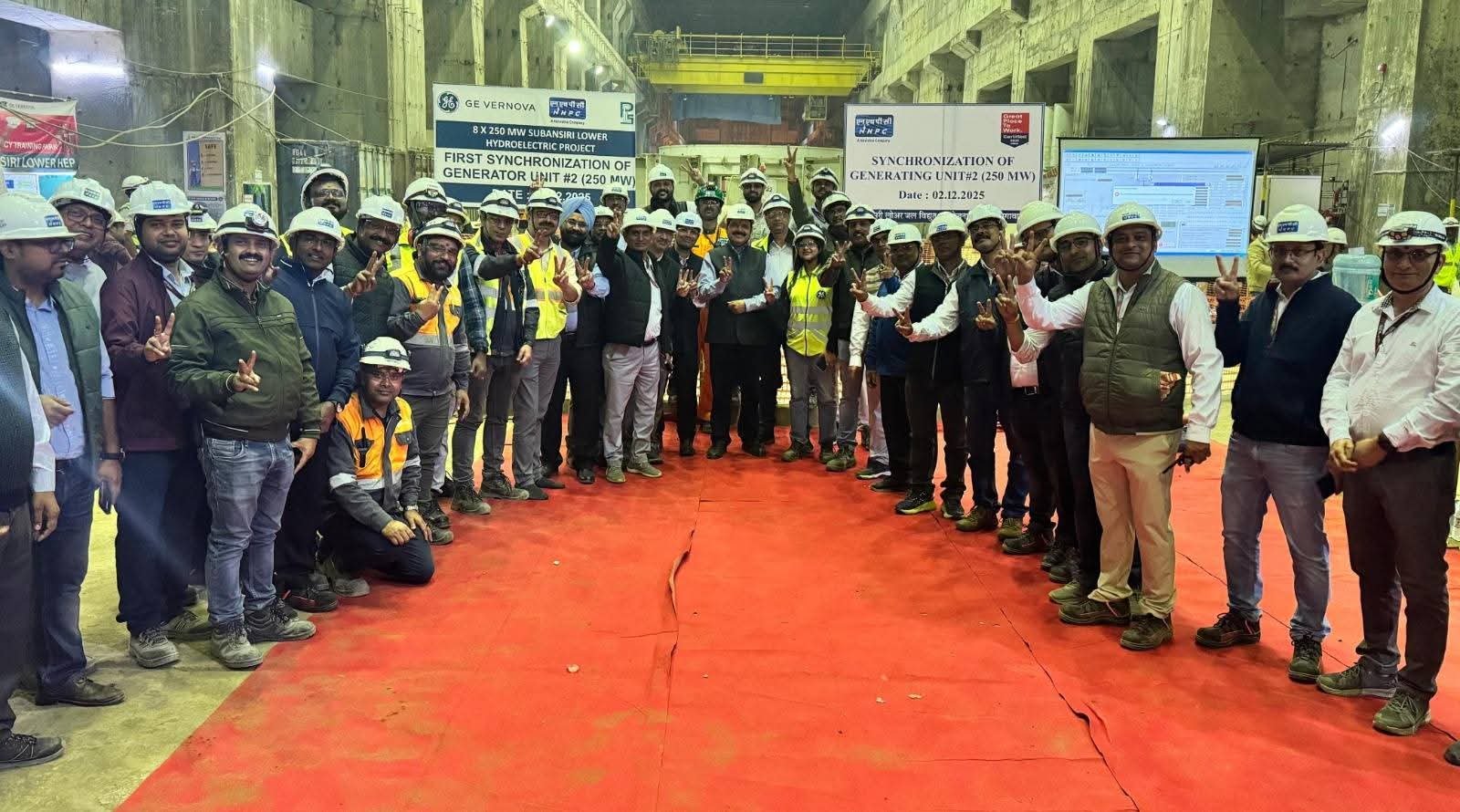
In a major boost to India’s clean energy goals, NHPC Limited successfully synchronised the 250 MW Unit (Unit 2) of the colossal 2000 MW Subansiri Lower Hydro Electric Project (SLHEP) with the National Grid on Tuesday. The project, strategically spanning Arunachal Pradesh and Assam, marks a critical step towards commissioning what is set to become India’s largest hydropower generating station.
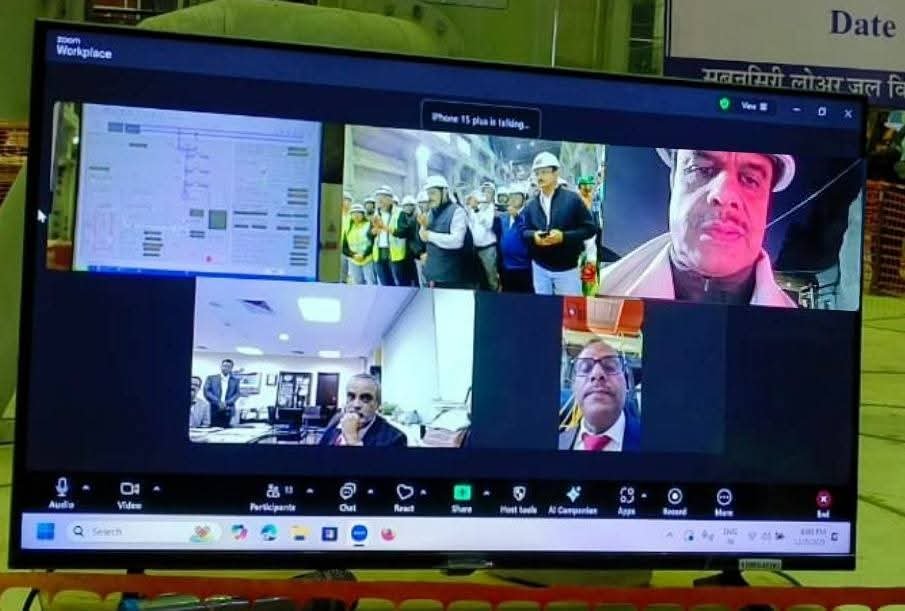
The landmark event was virtually overseen by Bhupender Gupta, CMD, NHPC, alongside key officials, including Mohammad Afzal, Joint Secretary (Hydro) from the Ministry of Power, and other senior directors. The successful integration was immediately hailed as a win for technological perseverance, especially given the project’s turbulent history.

CMD Gupta highlighted the national significance of the achievement: “The successful synchronisation of Unit 2 is a testament to NHPC’s technological mastery, strengthening the resilience of the National Grid and India’s stride toward a greener future.”
The Subansiri project’s journey has been significantly challenging, marked by an eight-year suspension that tested the resolve of all stakeholders. Construction began in 2005, but faced a comprehensive halt in December 2011 due to intense opposition from anti-dam organizations over environmental and social concerns.
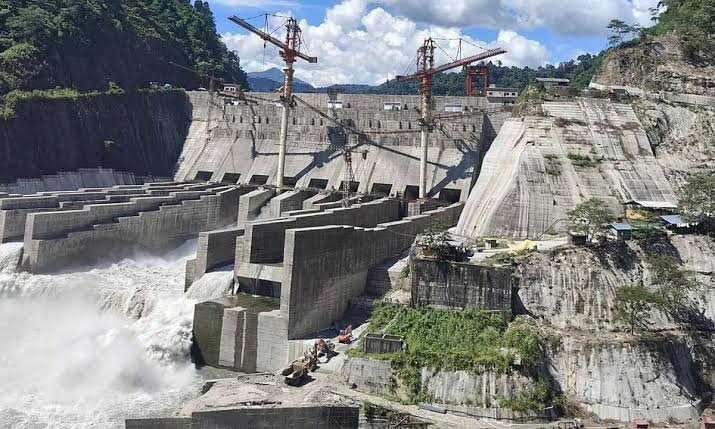
The deadlock finally broke in October 2019 when the National Green Tribunal (NGT) granted environmental clearance after exhaustive technical assessments and comprehensive review processes spanning nearly a decade. The clearance paved the way for the critical resumption of work.
The SLHEP distinguishes itself by utilizing innovative run-of-the-river technology. This method generates power by harnessing the natural flow of the Subansiri river water, requiring less extensive construction and minimising its environmental footprint compared to traditional dam-based projects with large reservoirs.
Rajendra Prasad, Executive Director and Head of Project, acknowledged the resilience of the teams who brought the project back to life. “We applaud the team’s resilience and urge them to carry forward the same passion and discipline as the project advances toward completion,” Prasad stated.
Upon full commissioning, the 2,000 MW capacity will substantially strengthen the nation’s renewable energy portfolio and significantly enhance electricity access throughout the critical northeastern region. The momentous achievement aligns perfectly with India’s broader goals of increasing clean energy production and reducing dependence on fossil fuel generation.