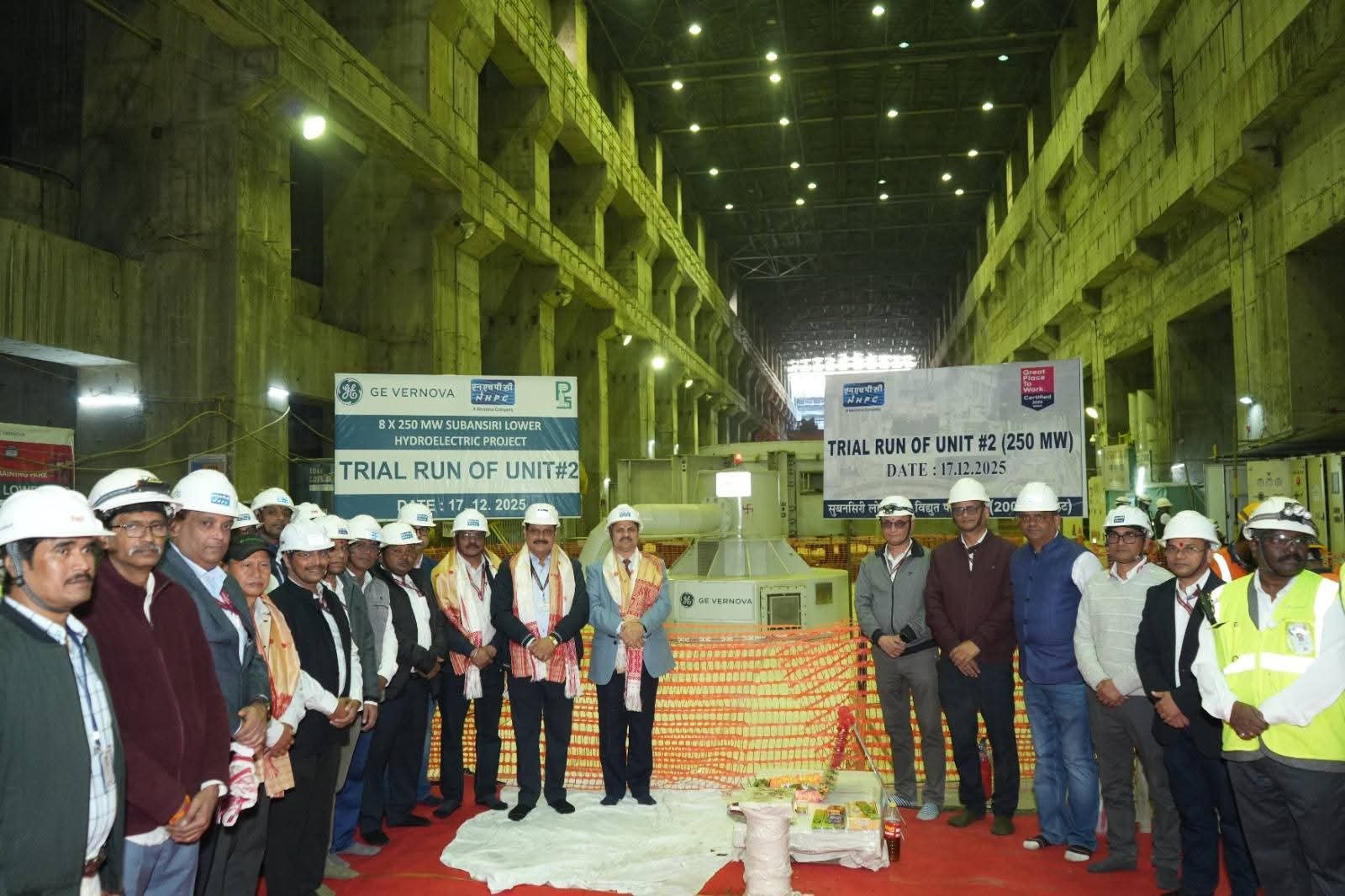






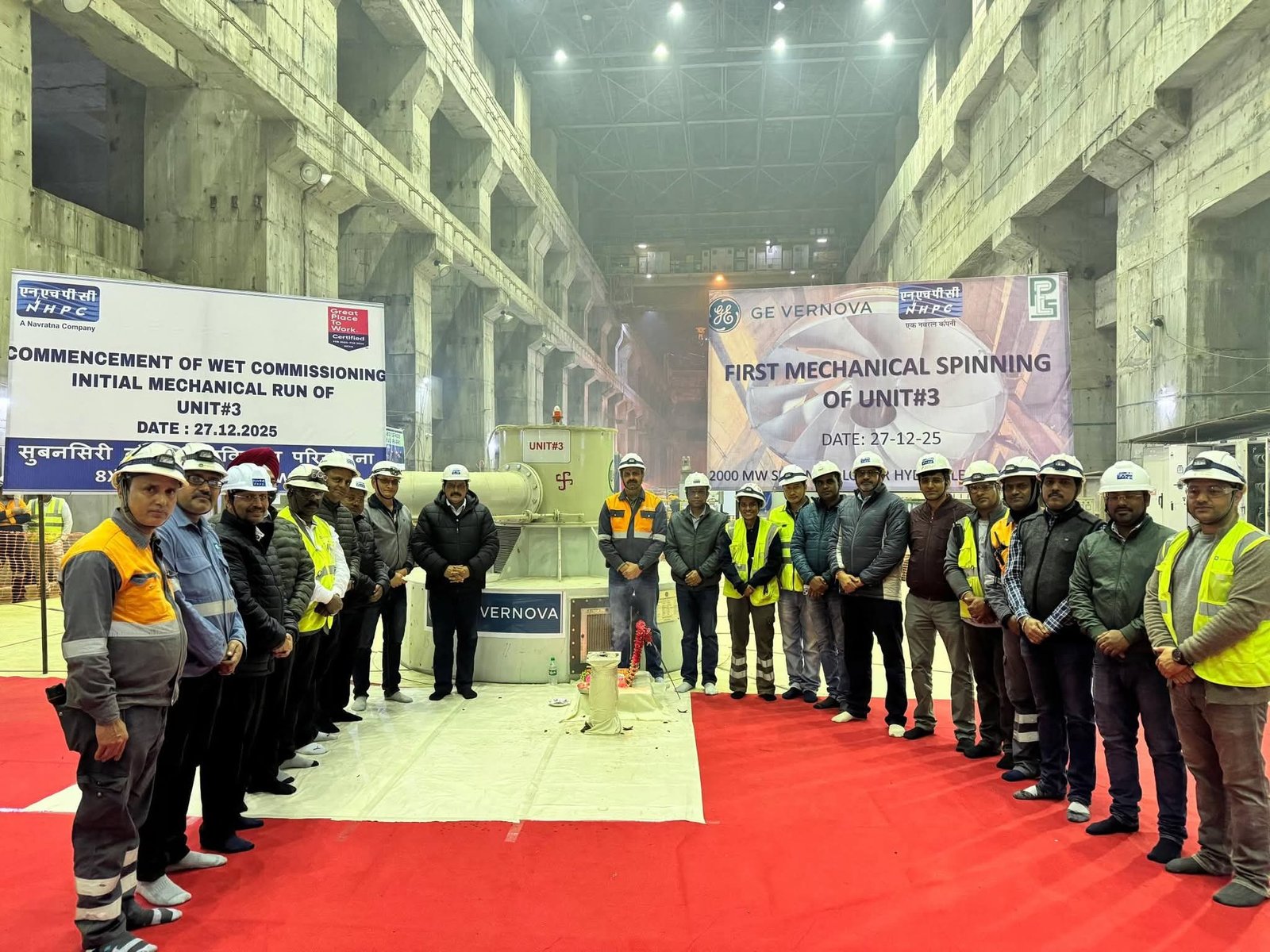
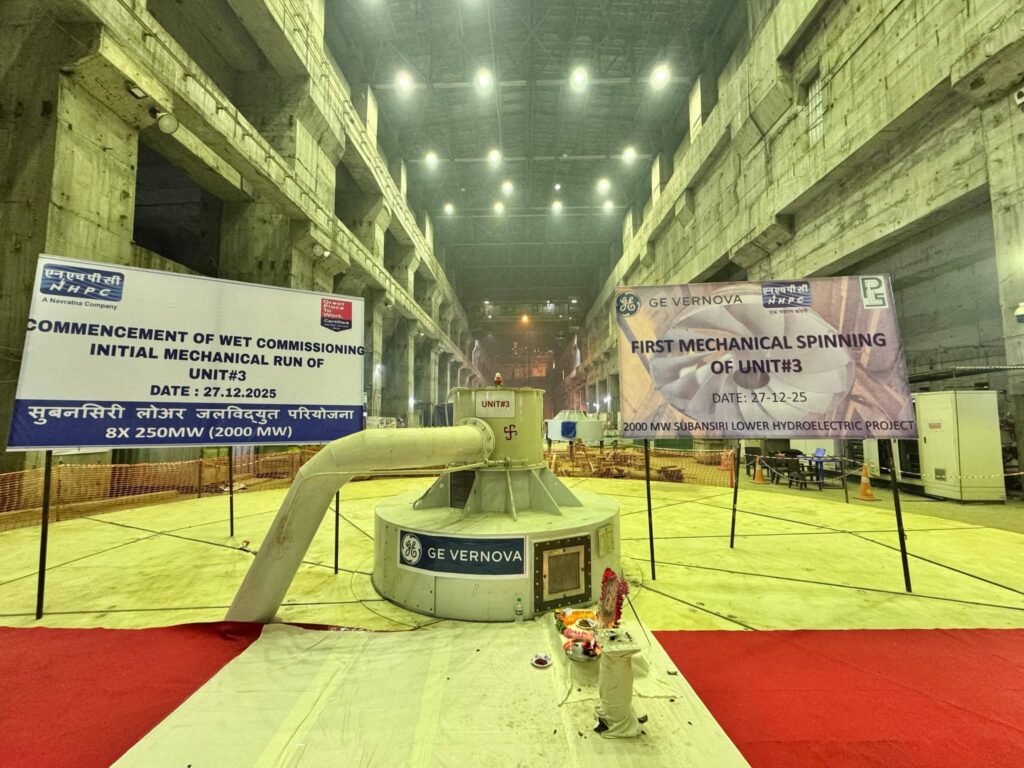
The National Hydroelectric Power Corporation Ltd (NHPC) officially commenced the wet commissioning of Unit–3 at the 2,000 MW Subansiri Lower Hydroelectric Project (SLHEP) on Saturday, (Dec 27). The milestone was marked by the successful mechanical run of the 250 MW machine, signaling the start of the synchronisation process for the third unit of what is set to become the nation’s largest hydropower installation.
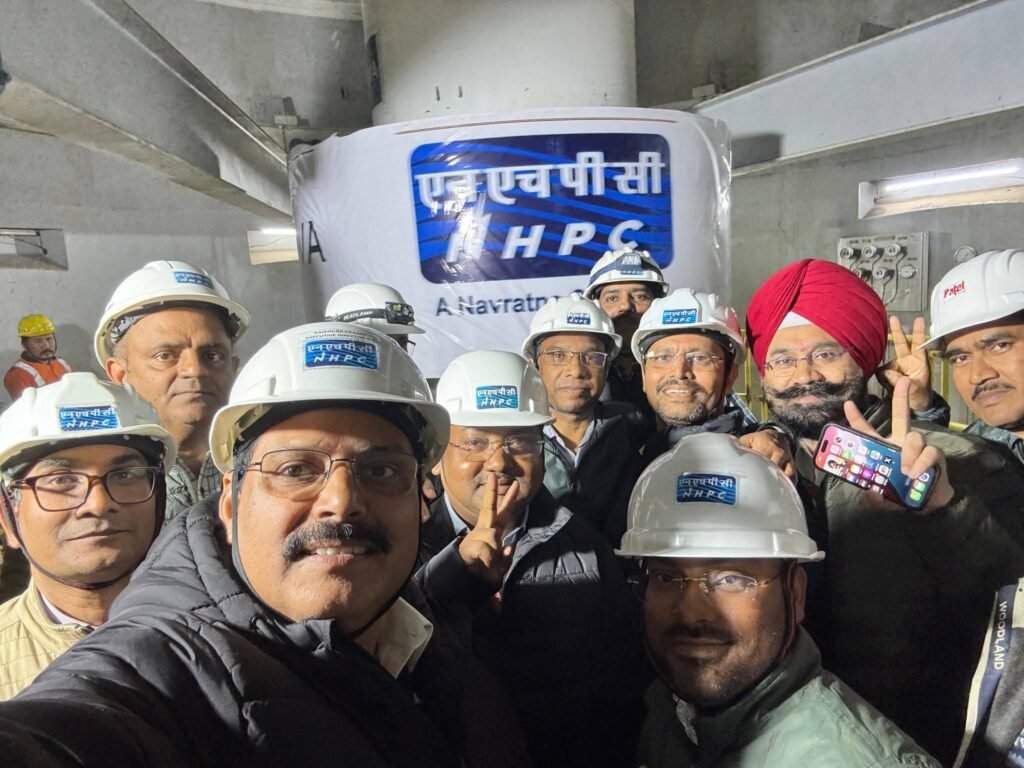
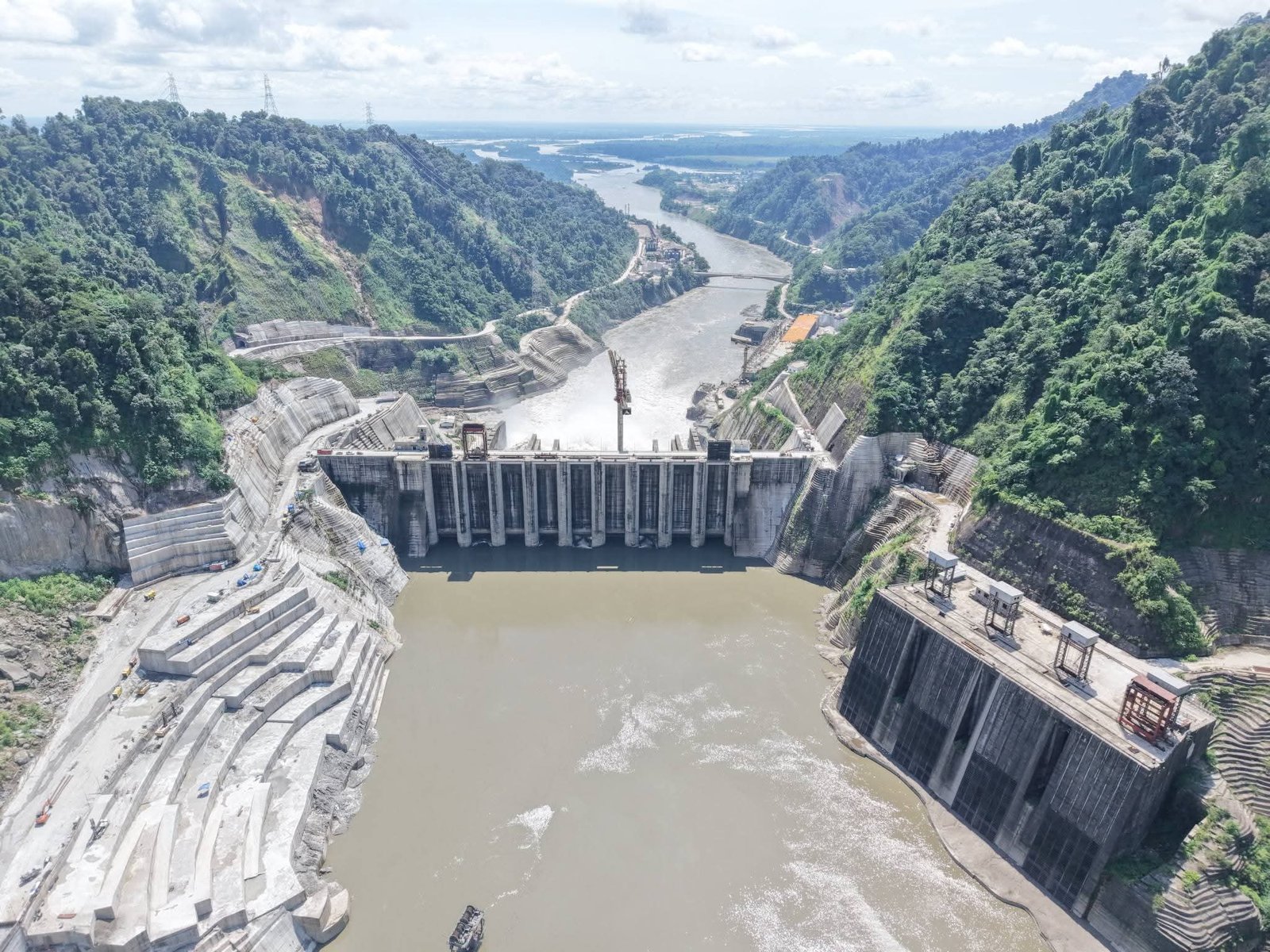
Strategically located along the border of Arunachal Pradesh and Assam, the Subansiri Lower project is a cornerstone of India’s transition toward sustainable energy. The successful run of Unit–3 follows the progress of earlier units, paving the way for the phased commissioning of the remaining five units. Once all eight turbines, each with a capacity of 250 MW, are operational, the project will boast a massive total capacity of 2,000 MW.
The project utilises innovative run-of-the-river technology. By harnessing the natural flow of the Subansiri River rather than relying on massive reservoirs, the project significantly minimises its environmental footprint while maximising energy output. The dam, situated 2.3 km upstream on the river, is designed to strengthen the national grid and reduce the country’s long-term dependence on fossil fuels.
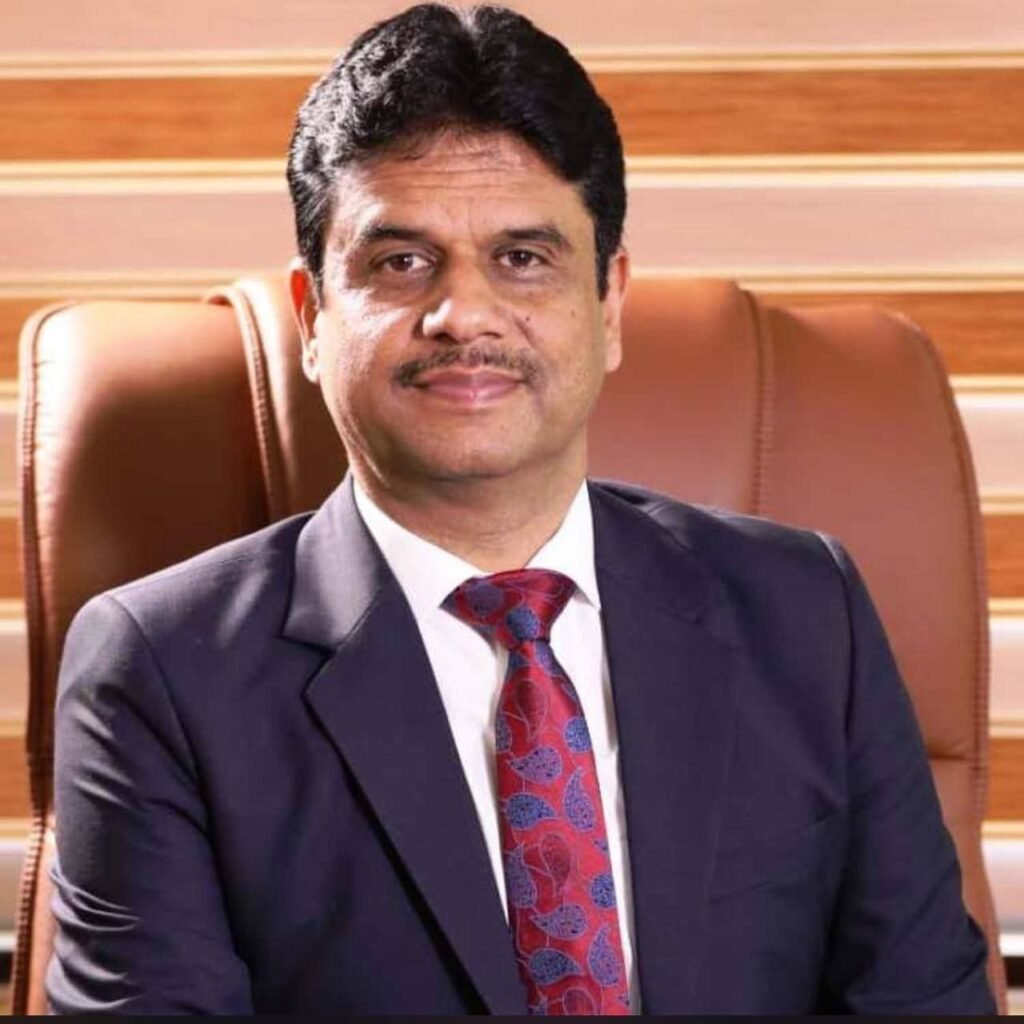
Bhupender Gupta, Chairman and Managing Director (CMD) of NHPC, expressed immense pride in the technical milestone, attributing the success to a collaborative national effort.
“This achievement is a testament to NHPC’s engineering excellence and a powerful step toward India’s clean, green, and self-reliant energy vision. I convey my heartfelt gratitude to the Ministry of Power, the Governments of Arunachal Pradesh and Assam, and our project partners. This progress reflects the unwavering grit of the Subansiri team in overcoming complex engineering challenges,” Gupta stated.
The CMD also lauded the project leadership, specifically the team led by Rajendra Prasad, Executive Director and Head of Project, urging them to maintain the momentum to ensure the timely completion of the remaining units.
The socio-economic implications of the SLHEP are vast. Once fully commissioned, the project will supply electricity to 16 states across India. Crucially, the Northeast region is slated to receive a dedicated allocation of 1,000 MW. Furthermore, both Arunachal Pradesh and Assam will benefit from free power allocations, ensuring that the local communities and regional economies directly reap the rewards of the natural resources being harnessed.