



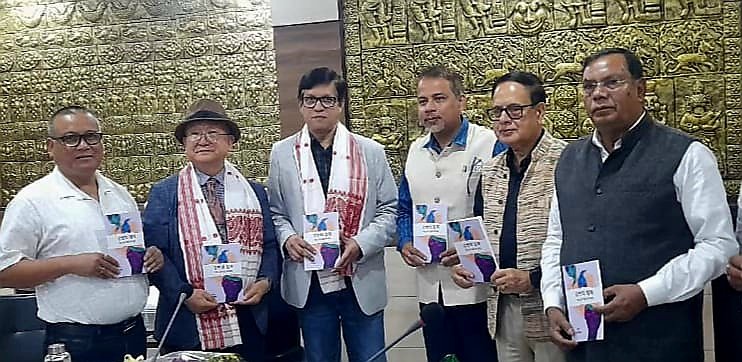
The Office of International Affairs at Dibrugarh University, in collaboration with the Inter-State Foreign Maitribandhan Sub-Committee of Asom Sahitya Sabha and Panchajainya, organised a prestigious book launch on November 14, celebrating cross-cultural literary exchange.
“Riparian Silence,” a poetry collection by renowned Assamese journalist, film critic, and writer Manoj Borpujari, translated in Korean by distinguished South Korean writer Seok Yong Chang was unveiled during the event. The acclaimed translator, who chairs the Committee of Korean Arts Critics and formerly taught cultural criticism at Seokyung and Dongguk Universities, brought Assamese poetic sensibilities to Korean readers.
The book was jointly launched by Prof Surajit Borkotokey, Director of International Affairs at Dibrugarh University, Dr Sashi Kanta Saikia, Convener of the Inter-State Foreign Maitribandhan Sub-Committee and Principal of DHSK College (Autonomous), former Dibrugarh University Vice Chancellor Prof Kandarpa Kumar Deka and retired Professor Dr Gopal Hazarika.
Borpujari explained the collaboration’s genesis, describing “how the Korean writer came forward to translate his book of poems into Korean,” highlighting the organic nature of their literary partnership.
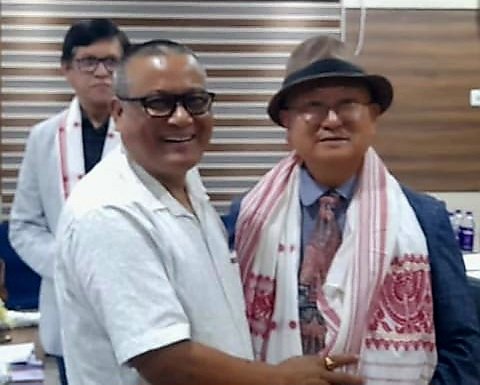
Chang, recipient of prestigious honors including the Younghwa Critic Award, PAF Critic Award, Best Artist for Film Criticism Award, Korea Culture and Art Award, 1st Le Monde Korea Critic Award, and Dance Critic Award, praised Assamese literary creativity during the event.
“I thank the organisers for attending the launch of this translation,” said Chang, whose acclaimed work “Movie Story Reading with Heart” has garnered international recognition.
Professors Dr Jyoti Prasad Phukan and Aditya Dahal welcomed the Korean guest on behalf of DHSK College (Autonomous).
Chang, former Chairman of the South Korean Filmmakers Association and former General Secretary of Korea Cinema Studies Association, brings distinguished credentials as former Chief Manager of culture and criticism at the prestigious Munhwa Journal-21.
This translation marks a significant milestone in Assamese-Korean literary relations, opening new avenues for cultural understanding between the Northeast and East Asia.