






Majuli MLA Bhuban Gam conducted an official visit to the historic Chorai Chung bird sanctuary on Sunday, reviewing preparations for the upcoming second edition of Chorai Chung Mahotsav-2025, a four-day festival from December 7 to 10, celebrating Assam’s oldest avian conservation site.
Accompanied by Majuli District Commissioner Ratul Chandra Pathak, Senior Superintendent of Police Horen Tokbi, ADC Bharat Konwar, DFO Mukut Chandra Das, BJP Majuli District President Deepak Goswami, and other officials, Gam inspected the picturesque sanctuary nestled in Majuli’s riverine landscape.
Established in 1633 under the royal patronage of Ahom King Swargadeo Pratap Singha, Chorai Chung stands as India’s first documented bird sanctuary, predating modern conservation efforts by nearly four centuries. The site embodies remarkable environmental foresight by Assam’s historical rulers.
During the visit, extensive deliberations occurred with the festival organising committee regarding the Mahotsav scheduled for later this year. The celebrations aim to attract tourists, conservationists, and history enthusiasts while highlighting the sanctuary’s unique biodiversity and centuries-long conservation legacy.
Writer and environmental activist Gobin Khound emphasised the festival’s broader objectives: “The Chorai Chung Mahotsav will function as an educational forum highlighting the sanctuary’s historical significance and ongoing conservation relevance. We aim to spotlight this underappreciated treasure of Assam. This celebration will resurrect its former prestige while establishing Majuli internationally as a hub of ecological and historical distinction.”
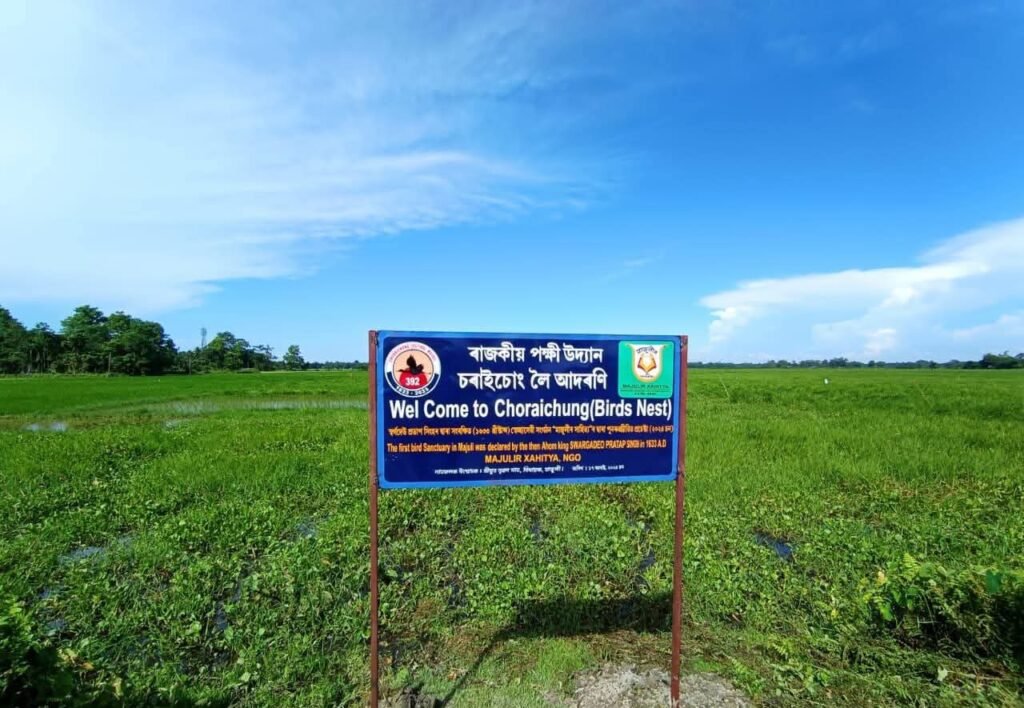
The forthcoming Mahotsav will feature cultural performances, guided bird-watching expeditions, and wildlife conservation seminars, expected to draw national participation.
“Majuli’s delicate ecosystem depends significantly on Chorai Chung for protecting migratory bird populations. This festival will generate essential visibility for conservation initiatives,” Khound stated.
The sanctuary continues to serve as a vital stopover for migratory birds, maintaining its centuries-old legacy of avian protection while adapting to contemporary environmental challenges.