




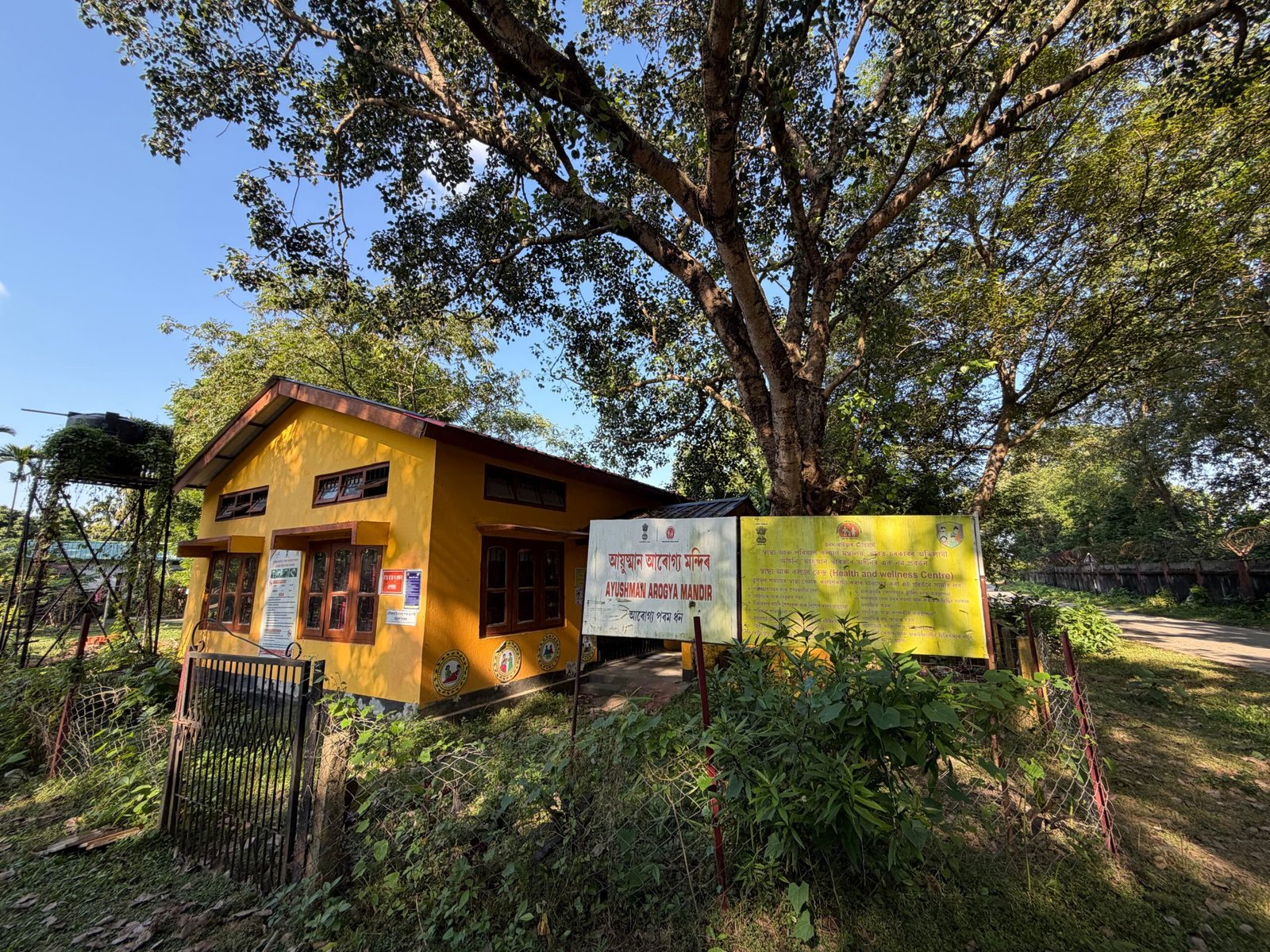
Napam – a village in Sonitpur District of Assam lies just beside Tezpur Central University, separated not by distance but by two very different worlds. Every day, students walk past its narrow lanes, buy tea from local shops and pass through the familiar stretch of road.
From the outside, the village seems peaceful, calm, and ordinary. But when one steps inside and sits with the people who call Napam home, a deeper reality begins to unfold. One made of struggles that rarely find a voice, and dreams that wait quietly for the right guidance.
As students of Mass Communication & Journalism, we were given the opportunity to understand this reality through a Participatory Rural Appraisal (PRA) conducted in October 2025. What began as a class assignment soon grew into an eye-opening journey into the heart of a community that lives so close to a centre of knowledge, yet remains far from the information that could change their lives.
During the PRA, we spent several days walking through the village’ s gravel paths, talking to families in their courtyards and listening to their experiences without filters or assumptions. Napam is not a remote village, it is just a few minutes away from a central university which is known for its academic excellence. But despite this physical proximity, the people here live with a lack of awareness about the very government schemes that are designed for their welfare.
Time and again, the villagers told us that information simply does not reach them. They had heard of programmes like MGNREGA, PMAY, or scholarships for school children, but very few knew how to apply, whom to approach, or what benefits they were entitled to. This communication gap hangs over the community like an invisible wall, preventing them from accessing opportunities that could improve their lives.
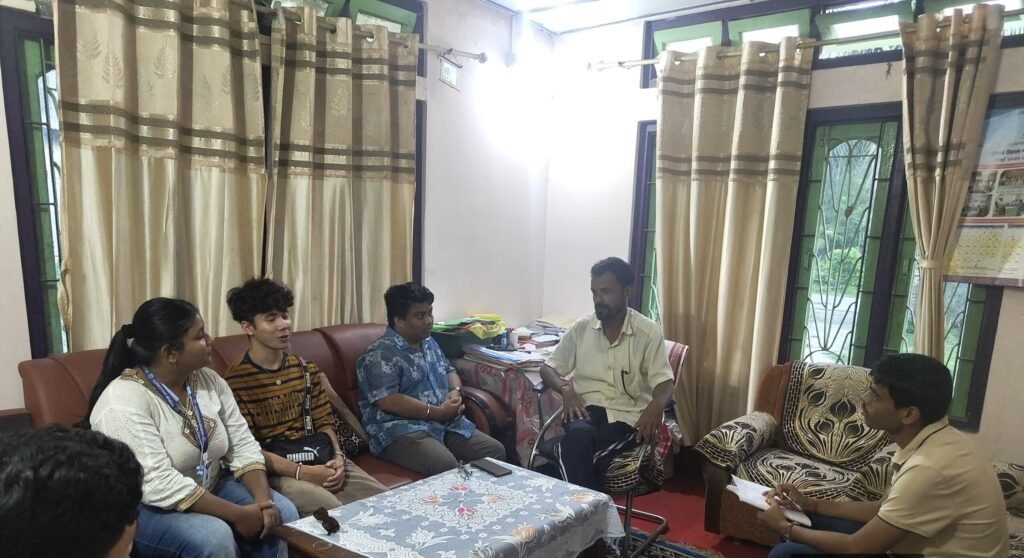
One of the issues people spoke about most was unemployment. Many young men in the village survive on daily wage labour, which is uncertain and often unavailable. Some travel to Tezpur town when they can, hoping to find temporary work. The irregular income puts constant pressure on families. A young villager told us that the fear of not having work weighs heavily on them, and it affects their confidence as much as their finances.
While the government offers employment schemes, the lack of awareness prevents these young people from taking the first step. The PRA revealed that unemployment in Napam is not simply a matter of lack of jobs but it is deeply connected to missing information, limited access to skill development, and poor
communication between local authorities and villagers.
As we continued our discussions, women from different parts of the village spoke with quiet courage about their challenges. Many of them expressed a strong desire to join self-help groups, learn tailoring or food processing, or participate in training programmes that could help them earn an income. However, they explained that they rarely receive clear information about when and where such opportunities are available.
One woman said she had heard about a training session happening somewhere nearby, but no one told the women of her neighbourhood how to register or whom to contact. Many women believe that if they had someone to guide them-even with something as simple as filling a form-they would take part wholeheartedly.
Some of the women also opened up about sensitive issues such as alcoholism and its impact on their families. Alcohol consumption in the evenings is common in the village and often leads to conflicts at home. For many women, the emotional and financial disturbance caused by alcoholism becomes a daily struggle. Yet they spoke not with anger but with a tired honesty, hoping for more awareness programmes that could help address such issues. They believe that counselling, community meetings, or awareness campaigns could slowly bring change, especially if conducted regularly.
Another striking observation during the PRA was the weak connection between villagers and local governance. Many residents did not know the names of their panchayat members or the dates of Gaon Sabha meetings. They were unsure about how to share their problems with local leaders or how decisions regarding the village were made.
This lack of civic awareness limits participation and makes governance feel distant. Even though the panchayat is meant to be the closest arm of government, for many villagers it feels like a structure they cannot reach or understand. This disconnect results in poor coordination, reduced accountability, and missed opportunities for welfare.
Despite all these challenges, Napam is a village full of warmth and resilience. During our visits, people welcomed us with smiles, invited us to sit, and shared their stories with openness. Children peeked curiously from doorways, elders offered thoughtful insights, and the youth spoke passionately about their hopes.
The human spirit of Napam is strong; what it needs is support, guidance, and consistent communication. The villagers are not unwilling to change they simply lack the information that can help them move forward.
This is where Tezpur University can play a meaningful role. Being so close to the community, the university has the potential to bridge the gap between policy and people. Simple steps like distributing easy-to-read leaflets about government schemes, organising awareness camps in the community, helping villagers fill out forms, or conducting regular information meetings can make a huge difference.
Students, faculty, and volunteers can contribute by sharing knowledge and making complex procedures understandable to the people. When information flows smoothly, confidence grows, and participation increases. What we learned from the PRA goes far beyond numbers and observations. We learned that development begins with listening. When people feel heard, they open their hearts; when they understand their rights, they take action; and when they receive support, they begin to believe in
change.
The PRA allowed us to see the human side of development, the side that statistics cannot capture. We saw the dreams of young students, the worries of parents, the strength of women, and the resilience of elders. And we realised that something as simple as awareness can shape the path of an entire community.
Napam may still face challenges, but it holds enormous potential. With proper communication and guidance, the village can move towards a brighter future. As students returning to our classrooms after fieldwork, we carried with us not just notes and diagrams but a deeper understanding of what it means to engage with society.
The PRA reminded us that true development is not built only on policies or programmes- it grows through human connection, shared knowledge, and collective effort. If awareness reaches Napam, progress will follow. If communication improves, lives will change. And if communities and institutions work together, no village-no matter how small-will remain unheard.
(By Prasanta Verma, Mugdha Jyoti Borah, Department of Mass Communication and Journalism, Tezpur University)