





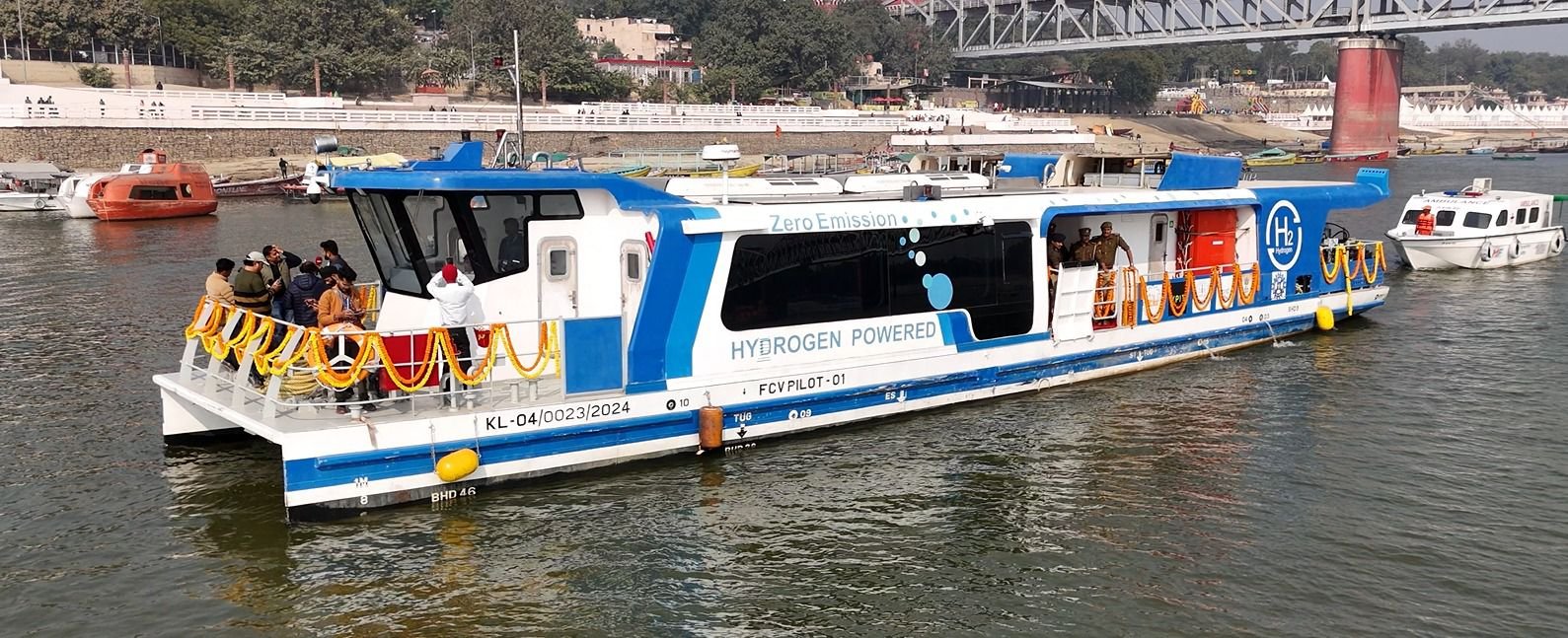
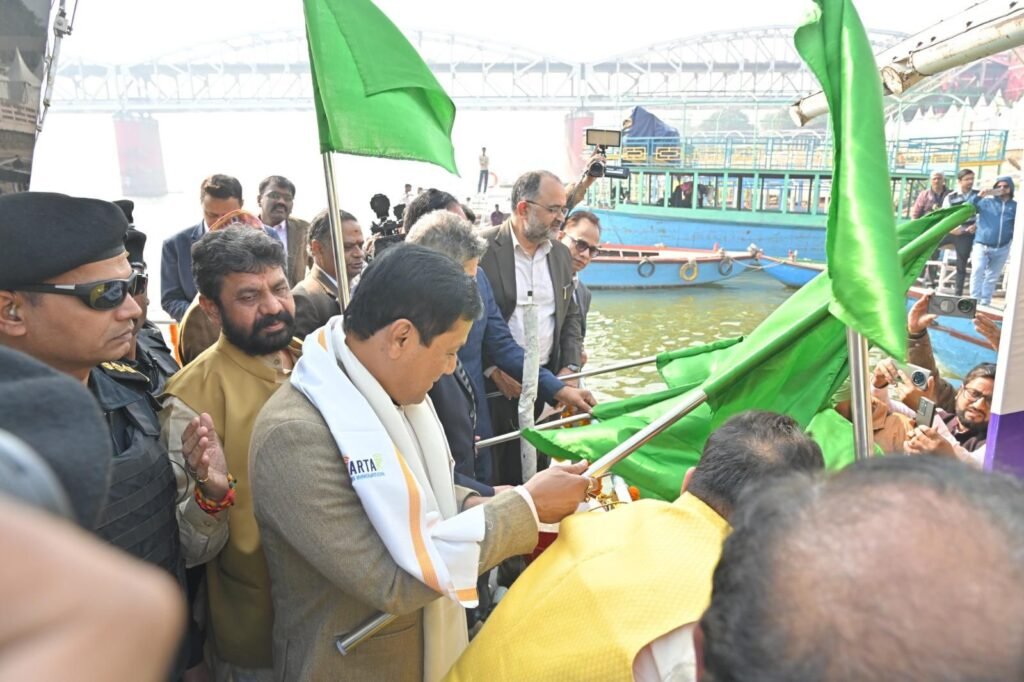
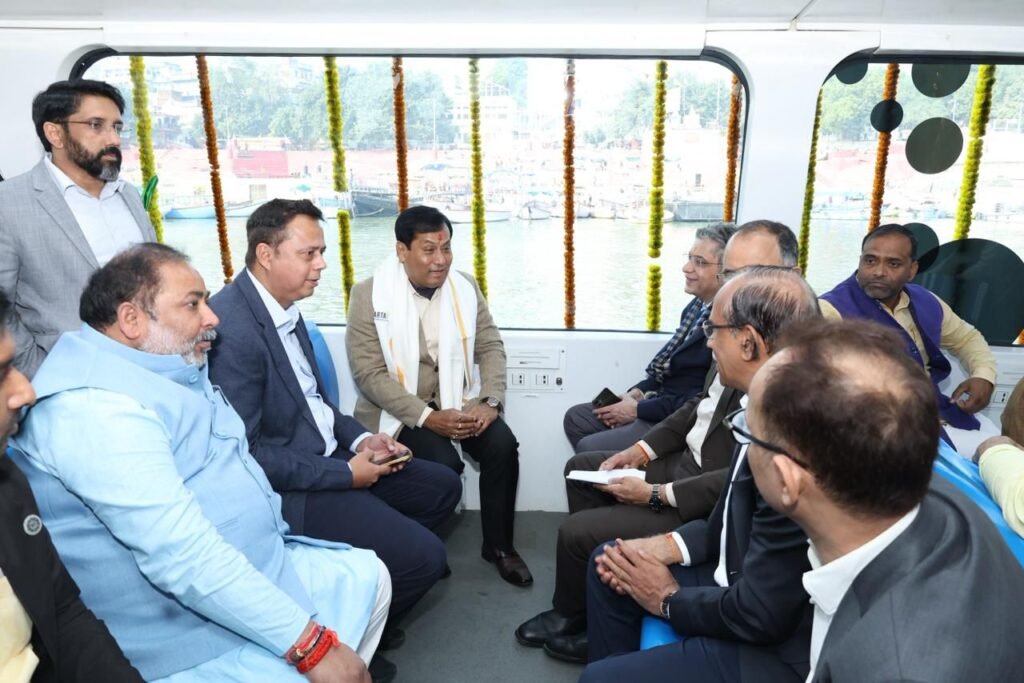
India’s first fully indigenously developed hydrogen fuel cell passenger vessel began commercial operations on the Ganga in Varanasi on Thursday, marking a significant step in the country’s green maritime transition. The vessel was flagged off at Namo Ghat by Union Minister for Ports, Shipping and Waterways, Sarbananda Sonowal.
The 24-metre, 50-passenger catamaran utilises a Low Temperature Proton Exchange Membrane fuel cell system that converts stored hydrogen into electricity, emitting only water vapour. Built by Cochin Shipyard Ltd. and owned by the Inland Waterways Authority of India (IWAI), it represents a pioneering demonstration of zero-emission propulsion for India’s inland waterways.
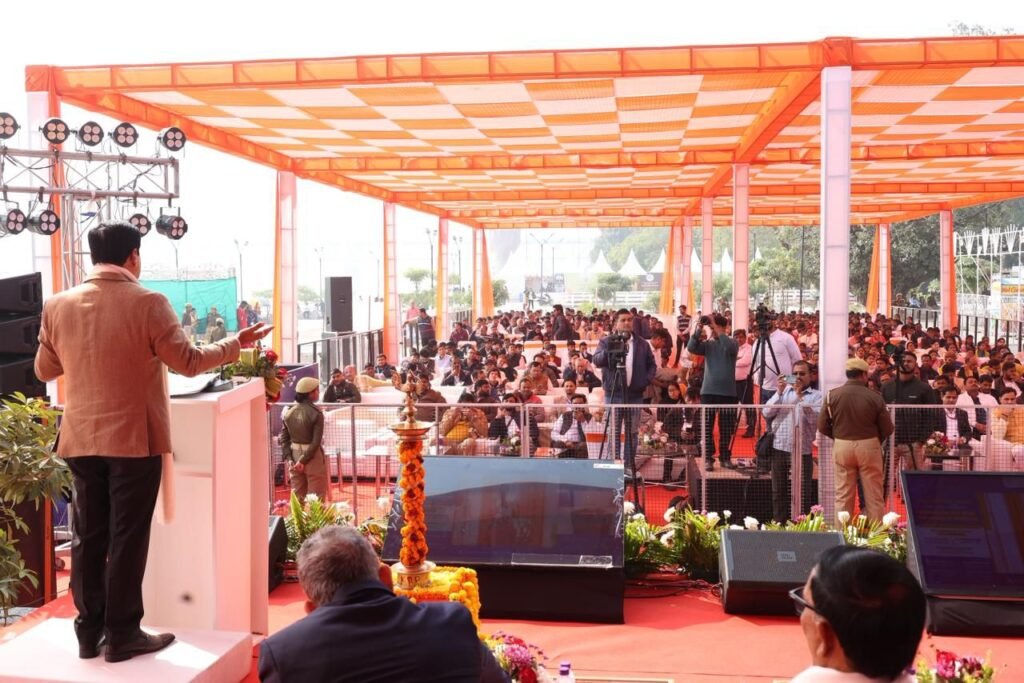
Speaking at the launch, Sonowal stated, “Under the dynamic and visionary leadership of Prime Minister Narendra Modi, India is witnessing a transformative shift toward clean, sustainable and self-reliant transportation systems. The launch of our first indigenous hydrogen fuel cell vessel is a shining example of the Prime Minister’s commitment to Make in India and the transition to green mobility across all sectors. This milestone also strengthens the wider mission of rejuvenating and preserving our sacred Ganga.”
The vessel’s introduction aligns with national goals to achieve net-zero emissions by 2070 and supports the Maritime India Vision 2030. It can operate for up to eight hours on a single fill of hydrogen, cruising at speeds of 7-9 knots, and features a hybrid system integrating batteries and solar panels.
“This achievement is a testament to our resolve to meet India’s net-zero targets,” Sonowal added, highlighting the project’s role in building a modern, energy-efficient maritime ecosystem.
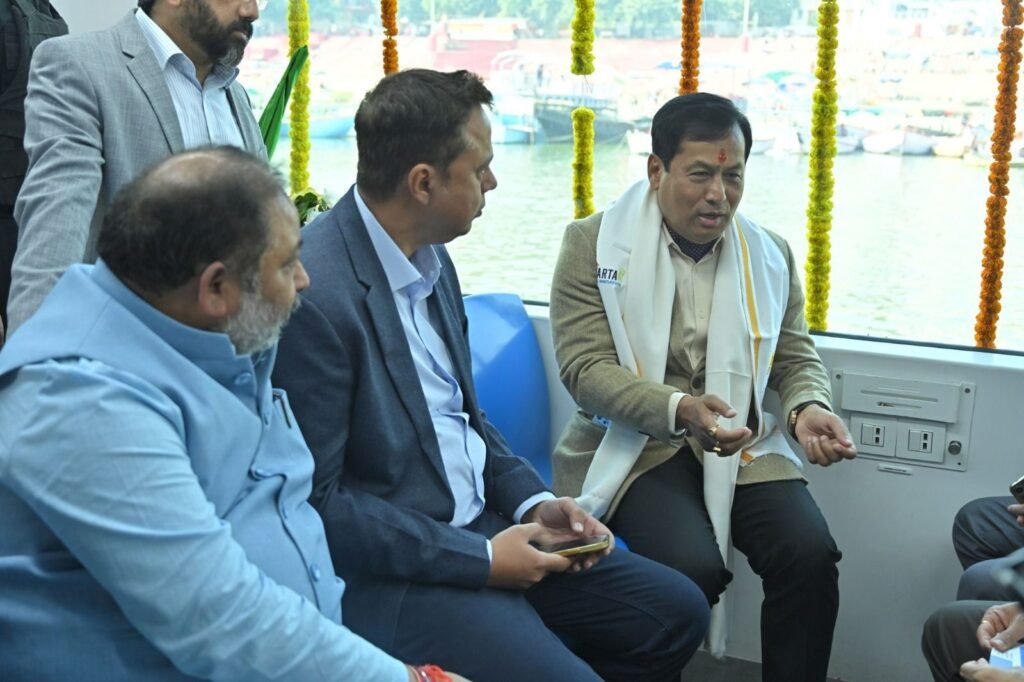
Following successful trials, the vessel’s inaugural commercial run covered a five-kilometre route from Namo Ghat to Lalita Ghat. Officials say the technology promises noise-free, pollution-free travel, aiming to reduce road congestion while boosting tourism and creating local employment in Varanasi.