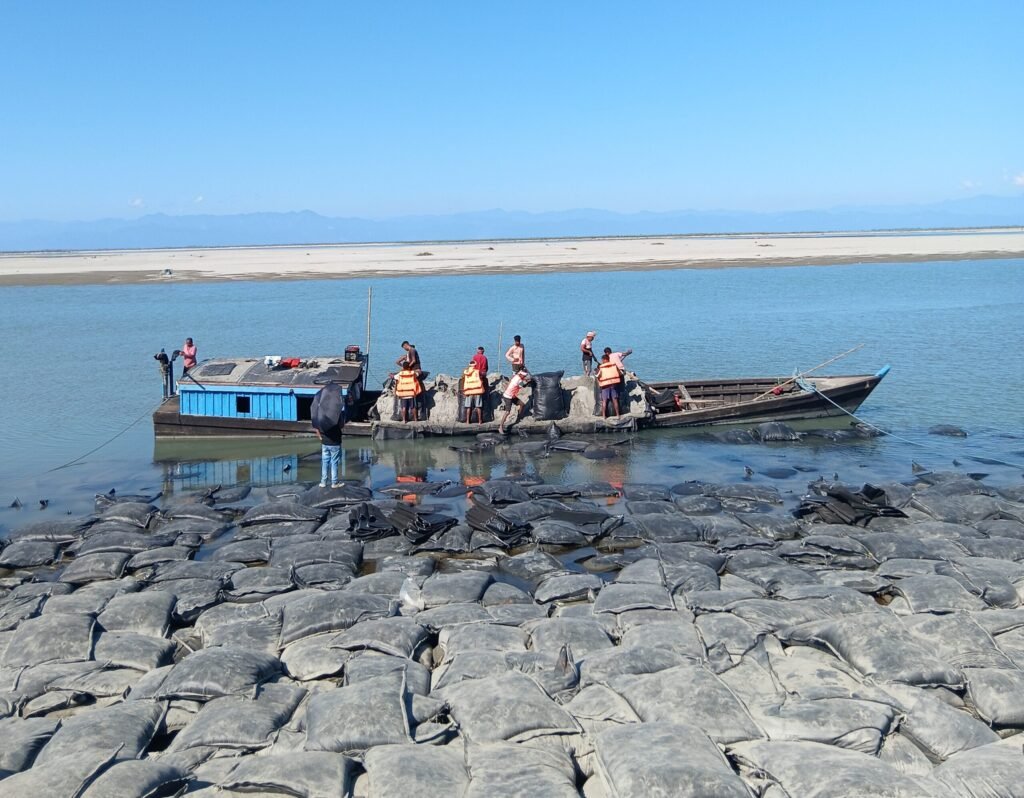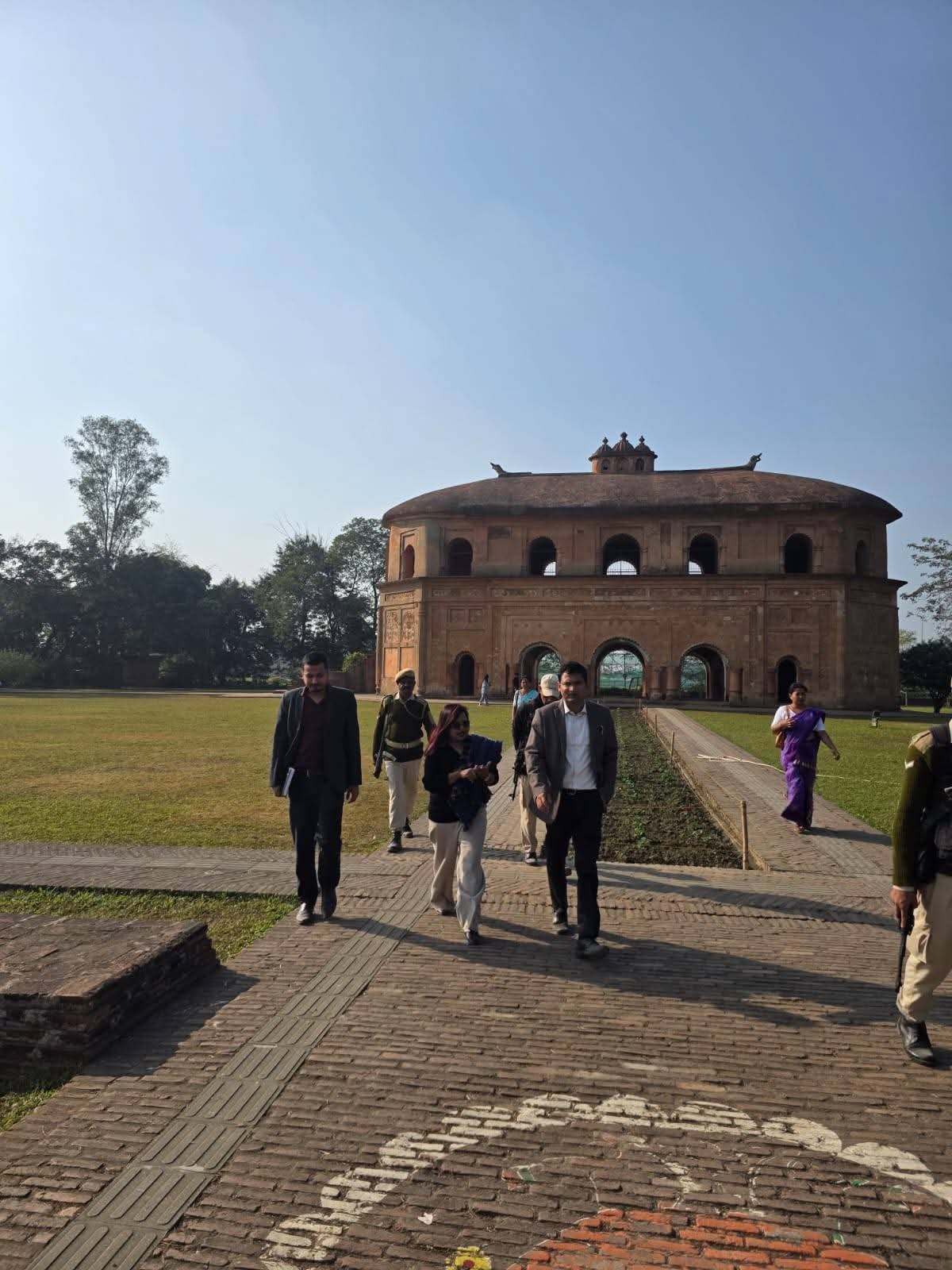






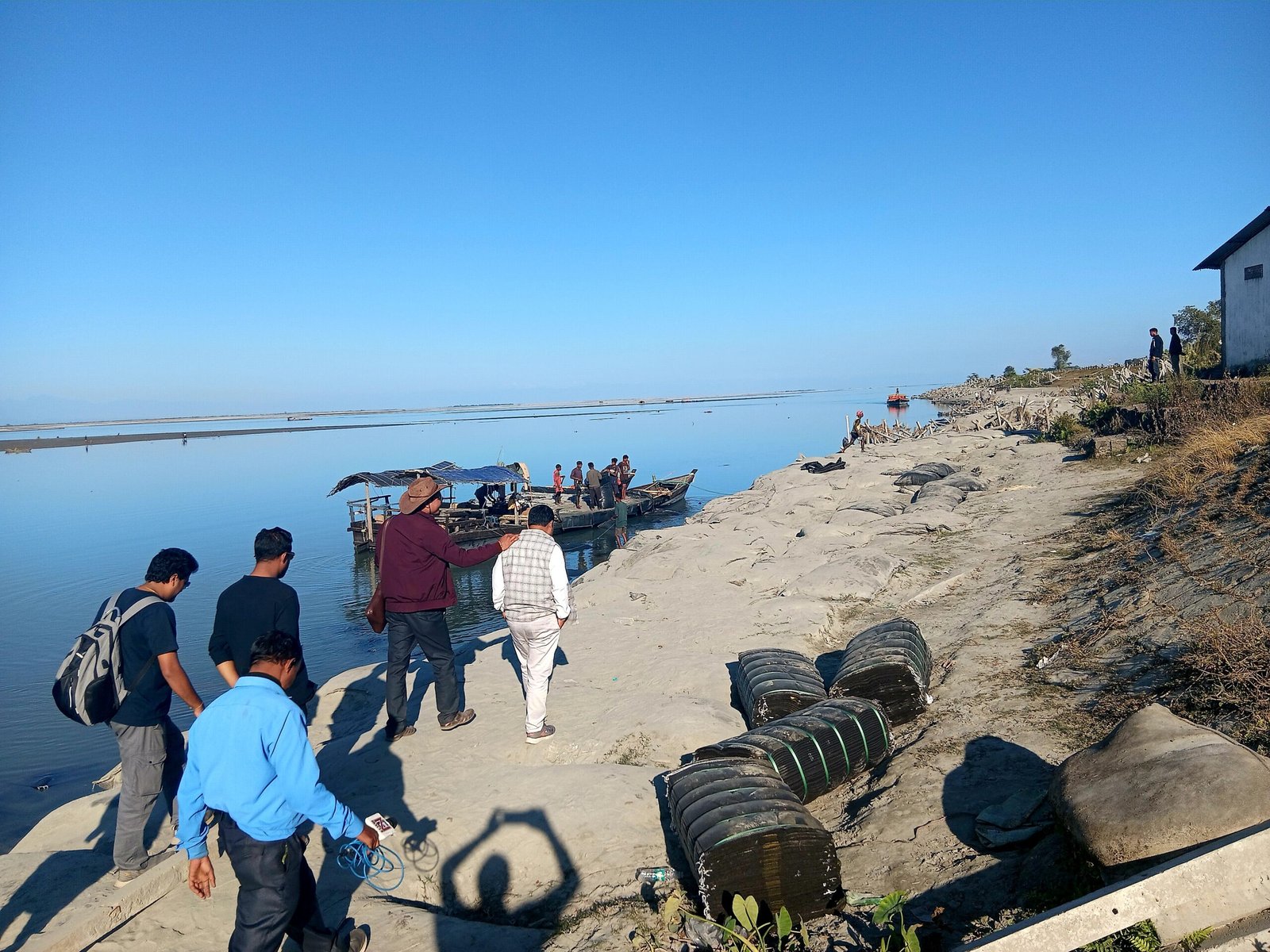
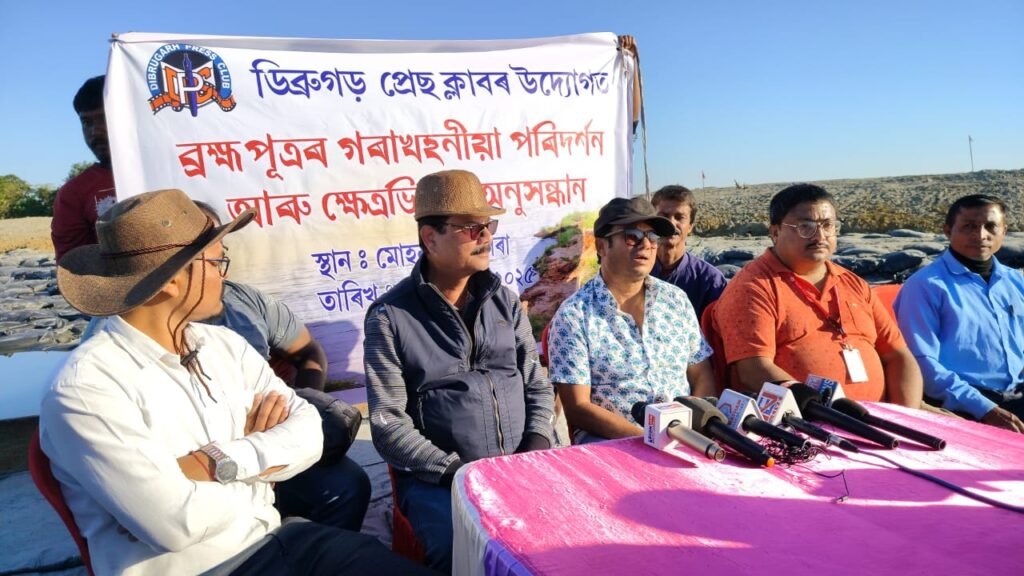
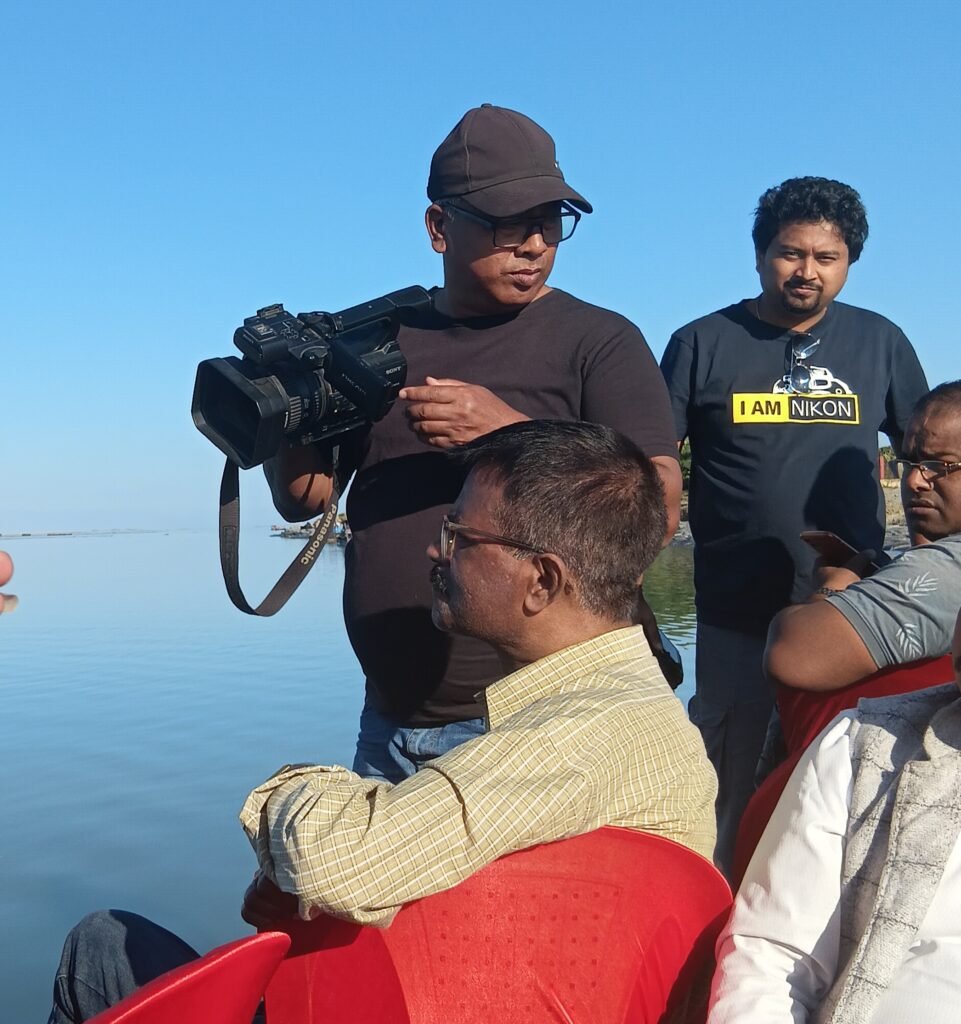
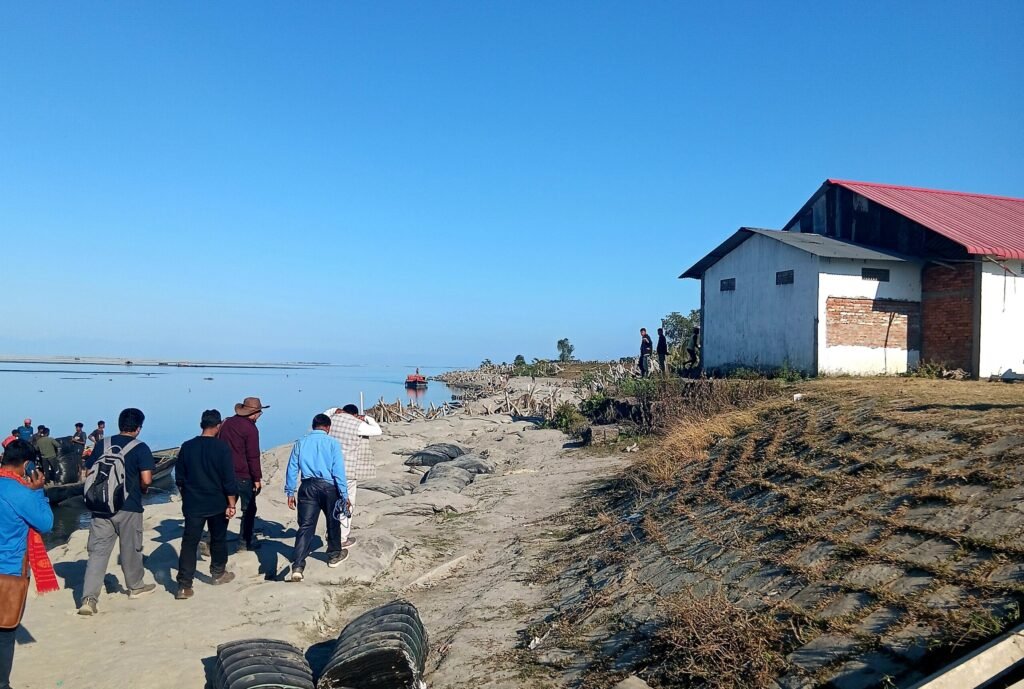
Members of the Dibrugarh Press Club on Saturday conducted a site visit to erosion-affected locations along the Brahmaputra River in the Nagaghuli area, witnessing firsthand the extensive damage caused by over a decade of relentless river erosion and the ongoing protective measures being implemented by authorities.
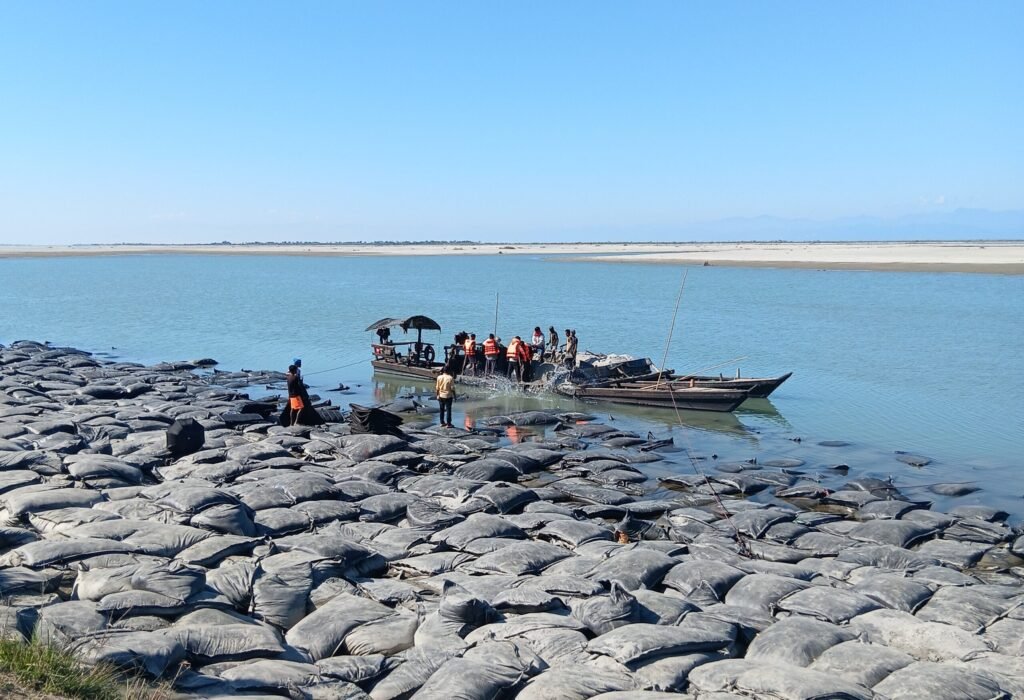
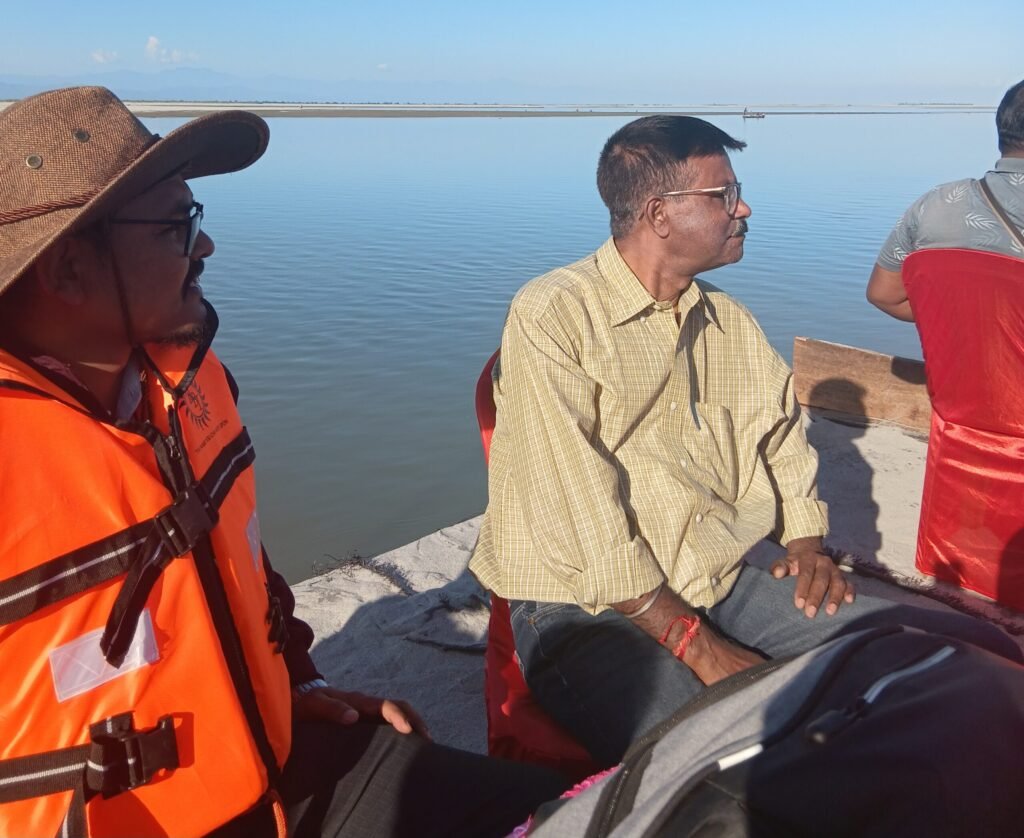
The media delegation, led by Dibrugarh Press Club President Manash Jyoti Dutta and General Secretary Ripunjoy Das, along with other office bearers and members, embarked on a boat ride accompanied by engineers from the Water Resources Department. The team navigated along the vulnerable riverbank to assess both the scale of devastation and the effectiveness of anti-erosion interventions currently underway.
Water Resources Department officials briefed the visiting team on multiple simultaneous projects being executed along an 800-metre erosion-affected stretch in the upstream areas of Nagaghuli. The protective strategy employs advanced C-type geo bag screening technology alongside traditional RCC porcupine structures to combat the river’s aggressive erosive forces.
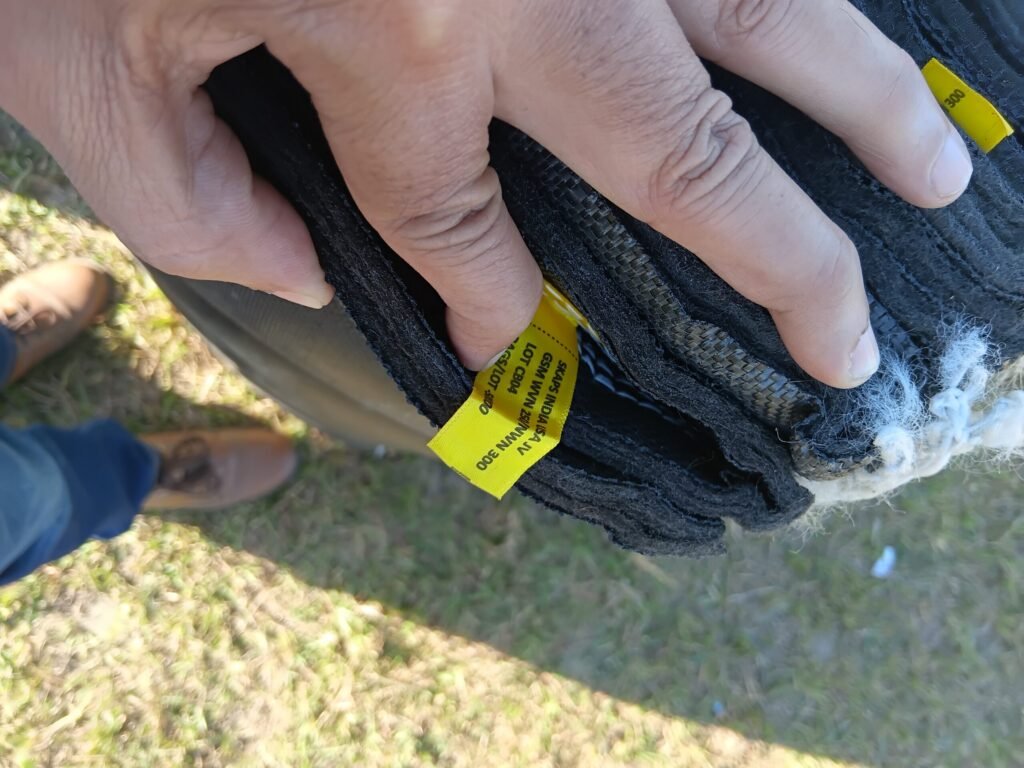
Significantly, the anti-erosion measures are utilising geo textile bags manufactured by SKAPS Industries, a geosynthetics manufacturer operating under a SKAPS India-USA joint venture. These American-made geo bags—large fabric containers filled with sand or soil—are being strategically deployed to absorb and deflect the water’s force, providing reinforcement to the threatened riverbank sections.
Officials confirmed that similar protection projects are being implemented along extended stretches of the Brahmaputra riverbank in Dibrugarh, from Maijan to Mohanaghat. They stated that operations continue round the clock during the winter season to ensure Dibrugarh is adequately protected before the onset of monsoon floods and erosion.
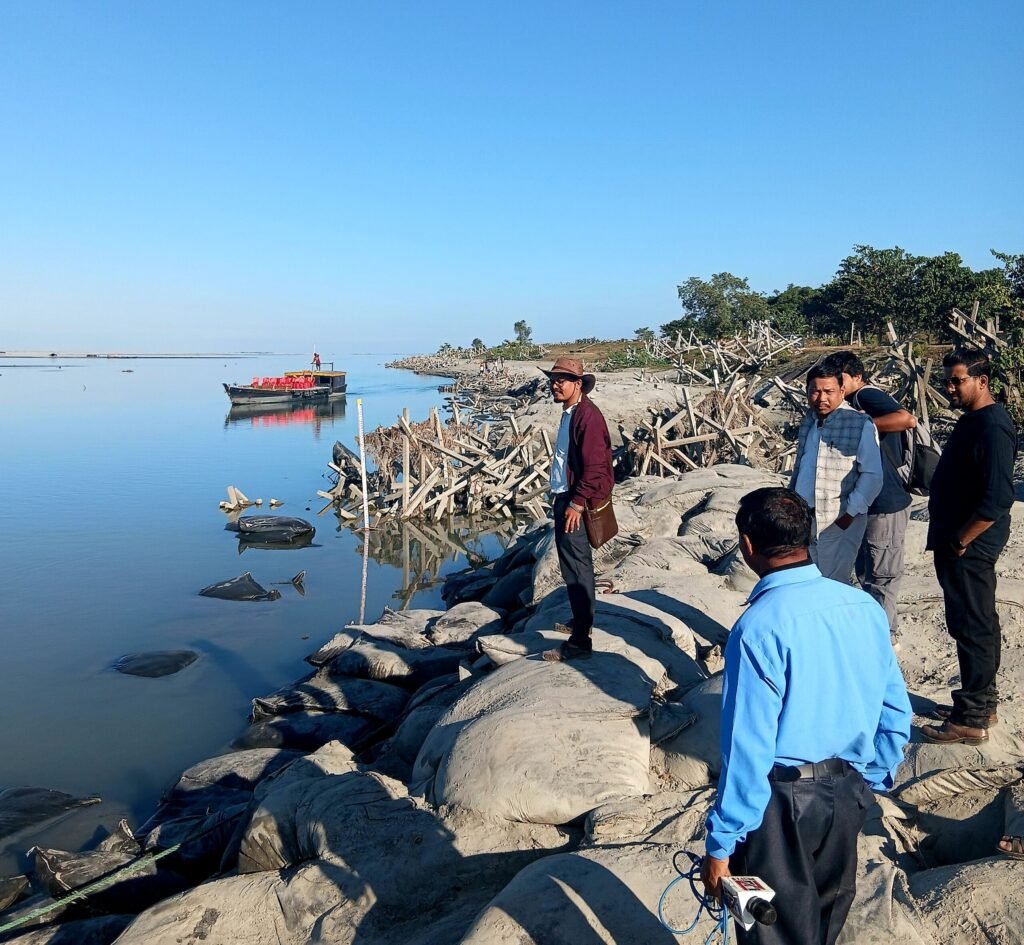
“Work is underway round the clock in the winter season so that during monsoon Dibrugarh doesn’t have to bear the brunt of flood and erosion,” officials stated during the inspection.
The current protective strategy combines modern and conventional engineering solutions. Type C geo bags are being urgently deployed along the most vulnerable sections, working in tandem with porcupines—heavy concrete structures designed to break the river’s momentum and stabilise the bank.
The Water Resources Department also revealed that enhancement of river spurs along the Brahmaputra is being carried out adjacent to Dibrugarh city. This extensive network comprises 8 stone spurs, 3 permeable spurs, and 47 wooden spurs, all strategically positioned to deflect the river’s current and reduce its erosive velocity.
The erosion challenge facing Dibrugarh has historical roots in the catastrophic 1950 Assam earthquake. The magnitude 8.6 earthquake, which struck on August 15, fundamentally altered the Brahmaputra’s course and raised the riverbed in the Dibrugarh region several metres above the city’s ground level.
The seismic transformation created what experts classify as a “perched river system,” where the Brahmaputra flows at an elevation higher than surrounding terrain. Consequently, the DTP Dyke functions not merely as a conventional flood barrier but as a critical dam-like structure restraining an elevated river—making any potential breach catastrophic for the low-lying city below.