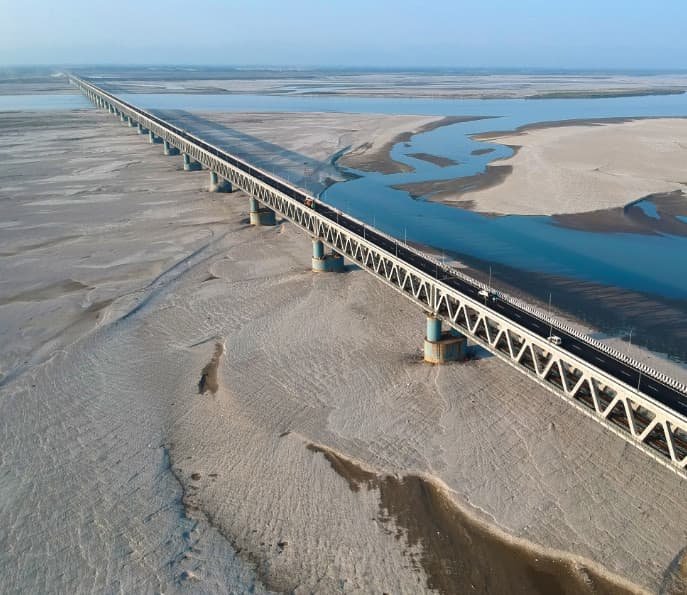




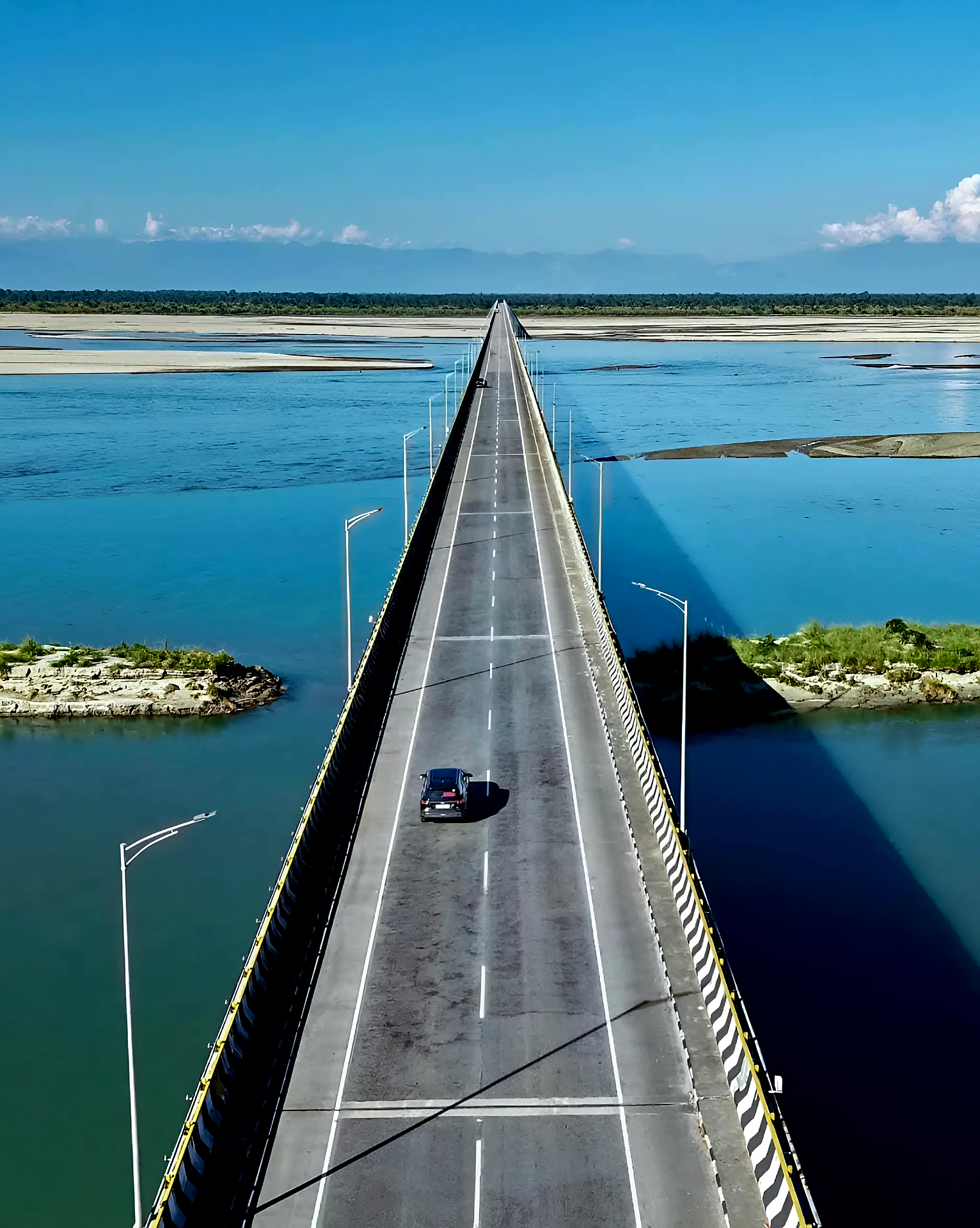
The iconic Bogibeel Bridge, India’s longest rail-cum-road bridge, completed seven years on Thursday since being inaugurated by Prime Minister Narendra Modi on December 25, 2018. The engineering marvel, located near Dibrugarh, stands as a symbol of connectivity, progress, and national integration for the region.
Constructed over the Brahmaputra River, the 4.94-kilometre-long bridge links the southern and northern banks of the Brahmaputra, connecting Dibrugarh with Dhemaji. Part of a strategic infrastructure project built by the Indian Railways, it has significantly improved transport, trade, and defense logistics across the region. The bridge, which serves as both a rail and road corridor, has drastically reduced travel time between Arunachal Pradesh and upper Assam.
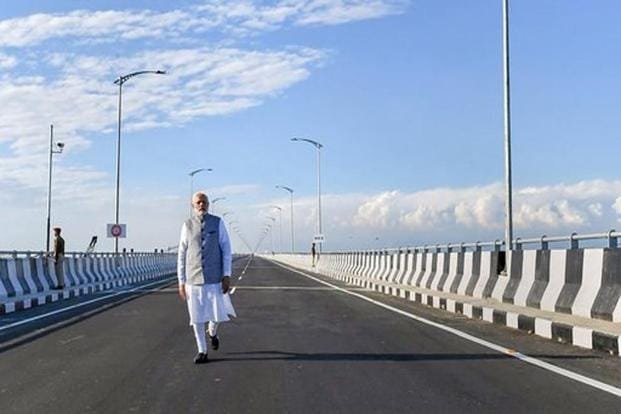
Locals and commuters on both sides of the Brahmaputra celebrated the occasion, recalling how the bridge transformed regional mobility.
“Before the bridge came up, it took several hours to cross the river by ferry. Now, we can reach Dhemaji in just about 20 minutes. The Bogibeel Bridge has truly changed lives and connected families,” said Bhaskar Gogoi, a resident of Dibrugarh.
Built at a cost of around Rs 5,900 crore, the bridge was dedicated to the nation on Good Governance Day, coinciding with the birth anniversary of former Prime Minister Atal Bihari Vajpayee, under whose government the project first gained momentum in 2002.
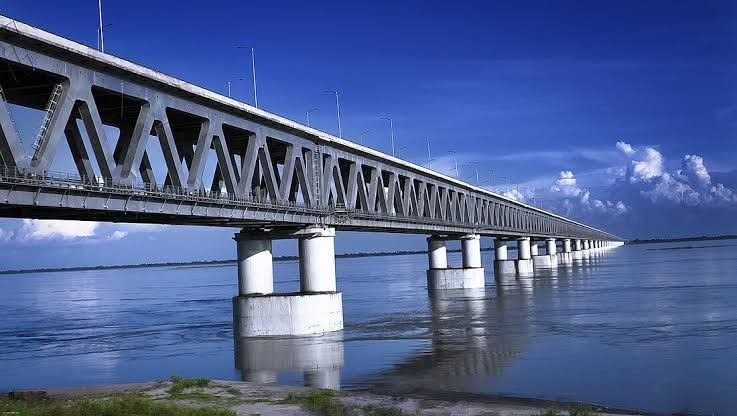
The Bogibeel project was executed by Hindustan Construction Company (HCC) and completed after years of challenging engineering work in the Brahmaputra’s difficult terrain.
Officials of the Northeast Frontier Railway said that the bridge continues to serve as a key connectivity hub, boosting socio-economic activity and aiding the armed forces’ mobility along India’s eastern frontier.
“Bogibeel is not just a bridge—it’s a lifeline for the Northeast,” said a senior railway official as it completed seven years on Thursday.