






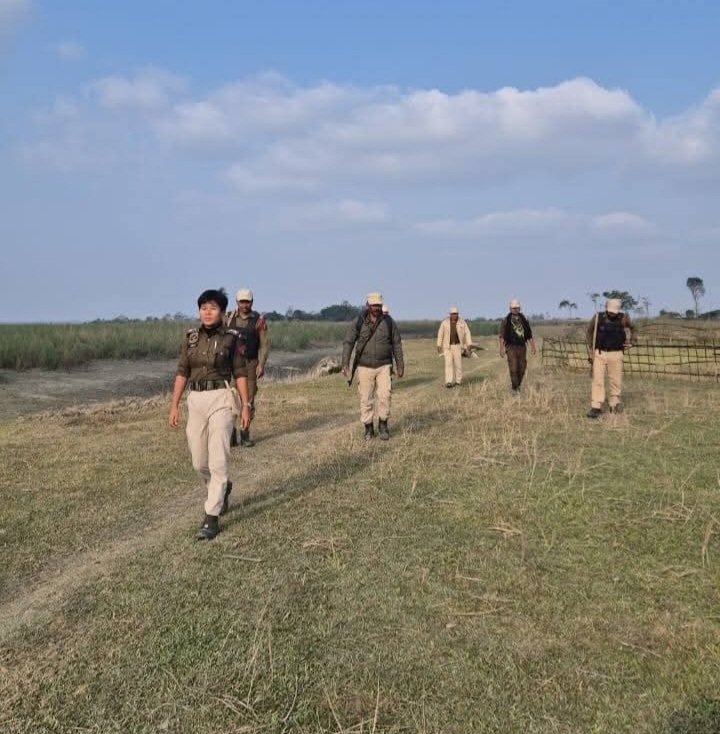
Golaghat Police on Friday conducted intensive anti-poaching operations at multiple locations across the district, in an effort to combat wildlife crime and protect the region’s rich fauna.The operation covered forest areas and sandbars (chaporis) along the Brahmaputra River, which serve as critical wildlife habitats and are often targeted by poachers.
Golaghat SSP Rajen Singh said that the drives were carried out simultaneously at multiple locations including Diffloo Pathar, Kancha Chapori and Bhakat Chapori, areas known for wildlife movement and vulnerable to poaching activities.
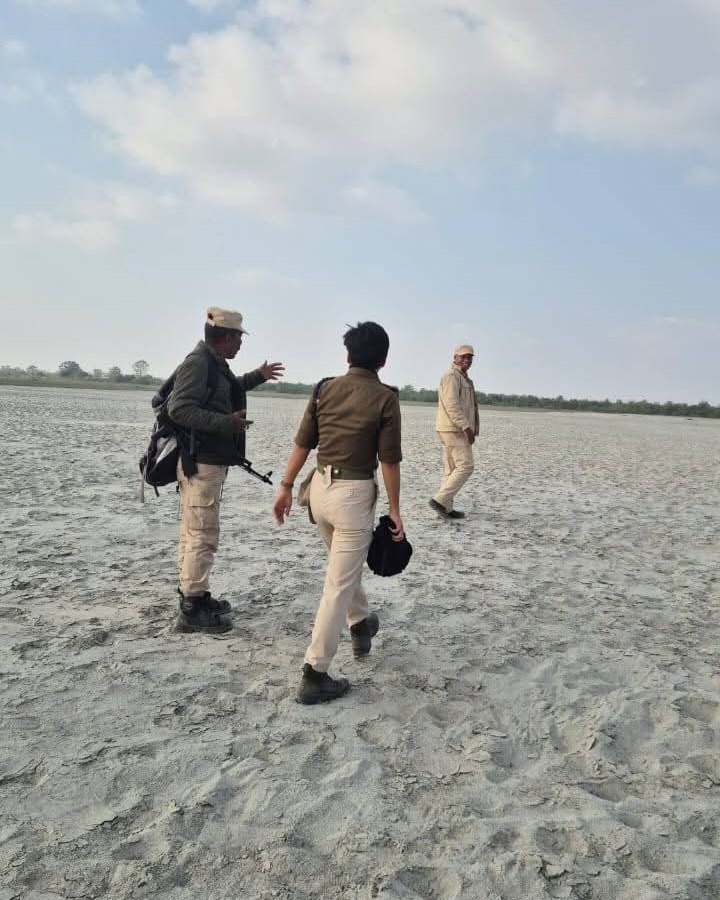
“We conducted intensive anti-poaching operations today across several sensitive locations in the district. Our teams covered both forest areas and river sandbars where wildlife populations are present,” SSP Singh said.
The Brahmaputra river sandbars in Golaghat district are ecologically significant areas that serve as seasonal habitats for various species of birds, deer and other wildlife. These sandbars, formed by silt deposits during the monsoon season, provide grazing grounds and nesting sites but also make wildlife vulnerable to poachers who exploit the relatively isolated terrain.
Diffloo Pathar, Kancha Chapori and Bhakat Chapori have been identified as hotspots requiring regular monitoring and patrolling to prevent illegal hunting activities. These areas see seasonal wildlife movement, making them attractive targets for poachers.
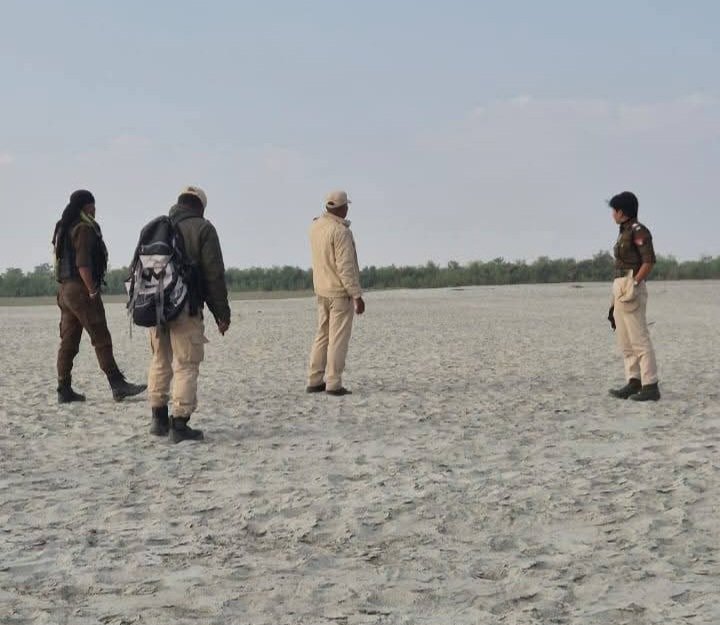
“These sandbars and nearby forest patches are critical wildlife corridors. Poachers take advantage of the difficult terrain and relative isolation to carry out illegal activities. Our operations today were aimed at disrupting such activities and sending a strong message to those involved in wildlife crime,” the SSP added.
Teams conducted thorough searches of suspected areas, checked for evidence of poaching activities such as traps, snares and illegal camps, and questioned individuals found in restricted forest areas.
Golaghat district, bordering Kaziranga National Park and situated along the Brahmaputra’s southern bank, faces persistent challenges from wildlife crime. The district’s geographical position makes it a transit route for poached animals and animal parts being smuggled to other regions.
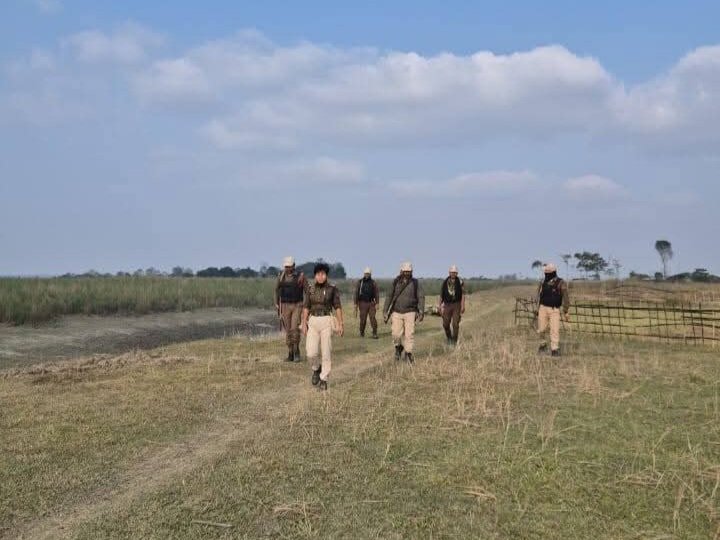
“Sandbars and forest fringes require constant vigilance. Such operations not only deter poachers but also help gather intelligence about their networks and methods,” said Aranyak Hazarika, a wildlife conservationist familiar with the region.
Local communities living near forest areas and river sandbars play a crucial role in wildlife protection by reporting suspicious activities. The police have appealed to residents to remain vigilant and inform authorities about any poaching-related activities.