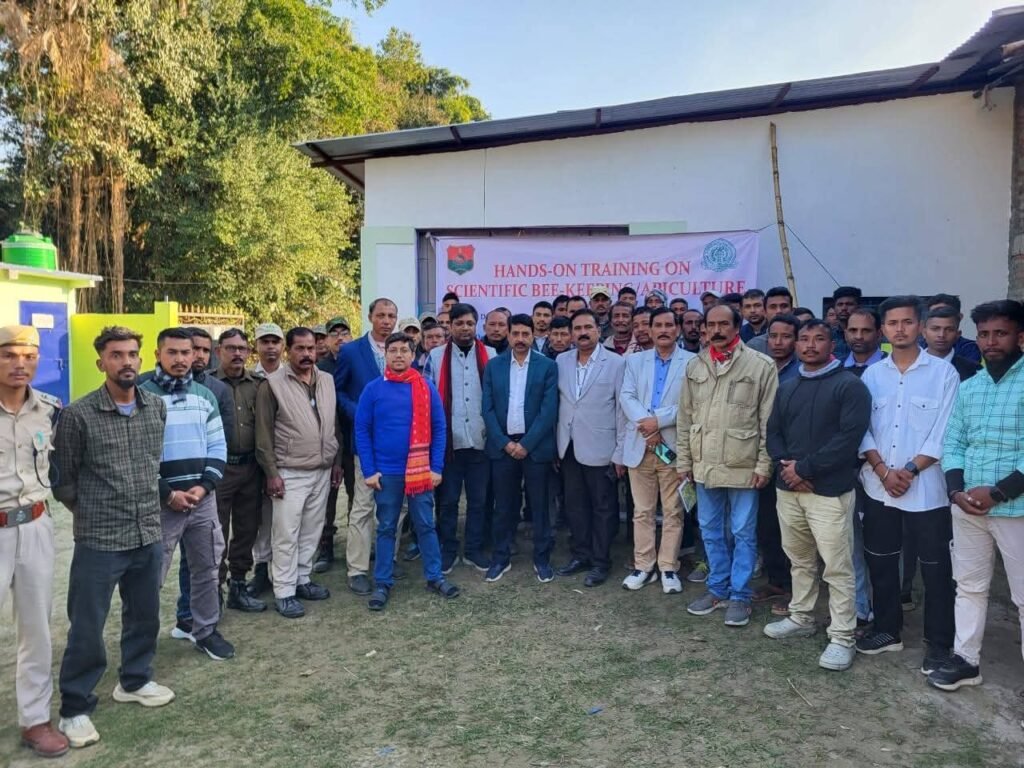





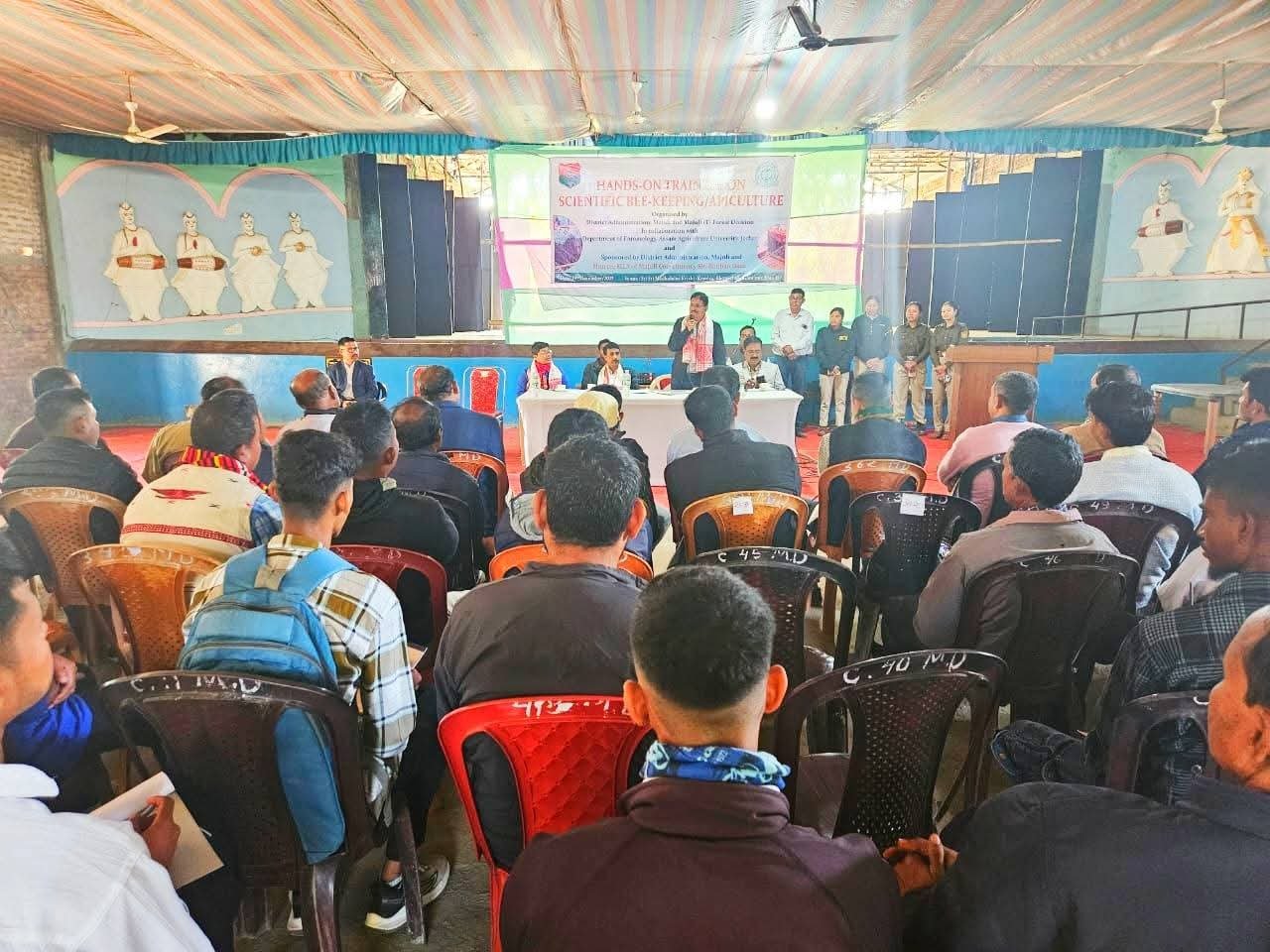
Recognising the vast potential for mustard honey production in world’s largest river island Majuli, a day-long training programme on “Scientific Beekeeping” was conducted at Garmur on Tuesday. The initiative, organised by the Office of the Divisional Forest Officer, Majuli, in collaboration with AICRP on Honey Bees and Pollinators, Assam Agricultural University (AAU), Jorhat, and sponsored by the district administration, Majuli, drew over 100 farmers and youth eager to learn modern beekeeping techniques.
The hands-on training programme was inaugurated by Ratul Chandra Pathak, District Commissioner of Majuli, and presided over by Mukut Chandra Das, Divisional Forest Officer, Majuli. Both of them emphasised the vast untapped potential for mustard honey production in the region, highlighting beekeeping as a viable livelihood opportunity for local communities.
“Majuli has exceptional potential for mustard honey production given our extensive mustard cultivation and favourable climate. Scientific beekeeping can provide sustainable income opportunities for our farmers and youth while contributing to agricultural productivity through pollination. This training is designed to equip participants with modern techniques that can transform beekeeping from a traditional practice into a profitable enterprise,” the DC stated in his address.
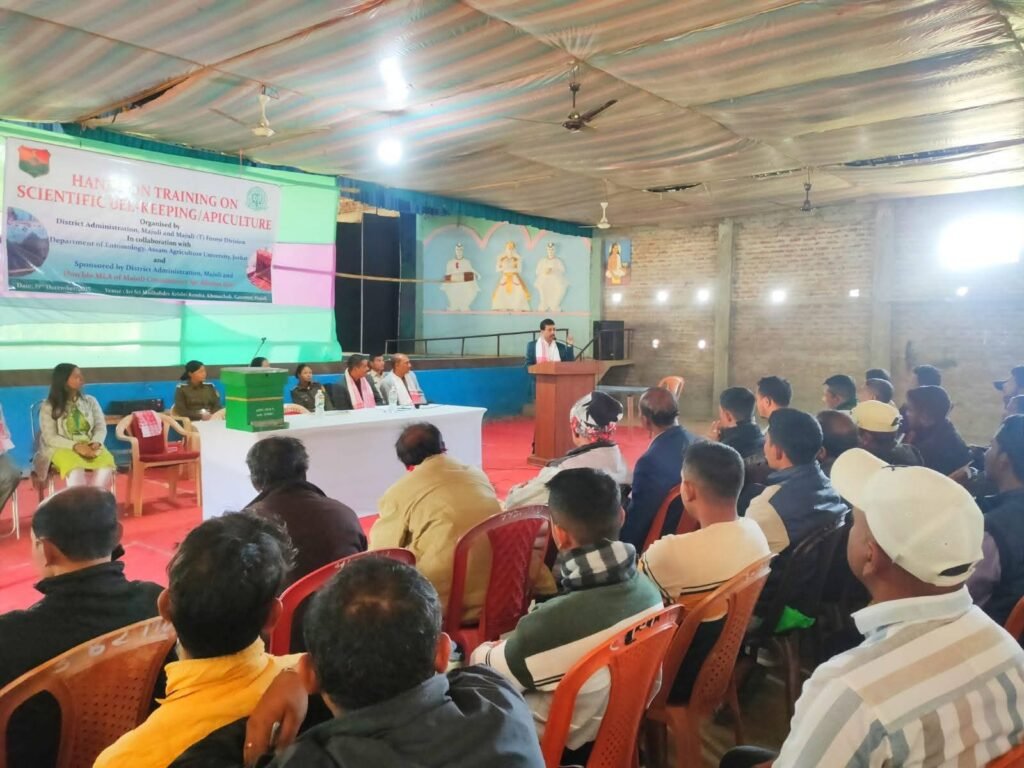
Divisional Forest Officer Mukut Chandra Das highlighted the ecological and economic benefits of promoting beekeeping in the district. “Beekeeping is not only about honey production—it plays a crucial role in pollination and maintaining ecological balance. By adopting scientific methods, our farmers can significantly increase their yields while contributing to environmental conservation,” Das remarked.
The training programme featured expert resource persons from AICRP on Honey Bees and Pollinators, AAU, Jorhat, including Dr MK Deka, Principal Investigator and Principal Scientist, Dr PPG Das, Scientist, and Abhibandana Das, Bee Professional. The experts conducted comprehensive sessions covering various aspects of modern beekeeping practices.
“We covered topics ranging from bee colony management, disease prevention, honey harvesting techniques, to value addition and marketing strategies. The focus was on equipping participants with practical knowledge they can immediately implement in their operations. Mustard honey has excellent market demand, and Majuli’s climatic conditions are ideal for producing high-quality honey,” MK Deka said.
The training included both theoretical sessions and hands-on demonstrations, allowing participants to understand the practical aspects of managing bee colonies scientifically. Topics covered included selection of bee species, hive management, seasonal care, pest and disease control, honey extraction, processing, and packaging.
Officials expressed hope that scientific beekeeping would emerge as a significant income source for the island district’s farming community, particularly during mustard flowering season when nectar availability is abundant.