





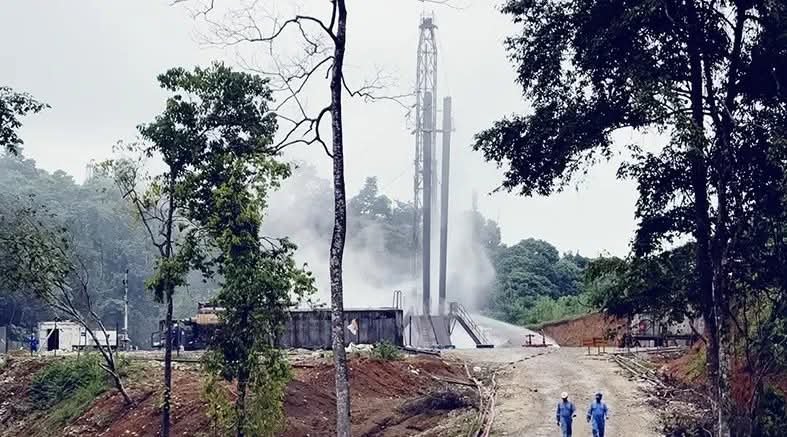
A major blowout at Well No 76 of the Kharsang Oil Field in Arunachal Pradesh’s Changlang district continues uncontrolled for the fourth consecutive day, raising serious questions about operational safety and environmental risks in the region.
The incident occurred Thursday afternoon at the newly drilled gas well when a functional fault developed in the blow-out preventer (BOP) during routine well-closing operations. The BOP, a critical safety device designed to seal wells and prevent uncontrolled releases, failed to contain the high-pressure reservoir.
GeoEnpro Petroleum Ltd (GEPL), the operating company, has deployed crisis management teams from Oil India Limited (OIL) and Oil and Natural Gas Corporation (ONGC) to assist in containment efforts.
Ravishanker Prasad, the company’s operation head, explained that “due to incomplete closure and gaps in the BOP, high-pressure gas flow has occurred in Well No 76.”
He added that the team is employing “the use of LCM pills followed by high-specific-density mud in the affected well” to control the situation.
While Prasad characterised the leak as “non-toxic methane gas,” experts warn that methane is highly flammable and such incidents typically release multiple hydrocarbon compounds that pose significant fire hazards and air-quality risks to surrounding communities.
This is not the first safety crisis at the Kharsang Oil Field. In 2015, a catastrophic blowout at Well No 60 triggered mass evacuations and required over two weeks to contain. Following that incident, the state-level monitoring and vigilance committee, led by Toko Anil from the Geology & Mining Department, condemned it as “manmade and due to utter negligence and incompetence of the company.”
The recurring nature of these blowouts has intensified calls for accountability and stricter oversight. Environmental advocates and local residents are demanding an independent inquiry to investigate the root causes, evaluate GEPL’s safety protocols, and assess the long-term environmental impact of hydrocarbon extraction operations in the ecologically sensitive region.
With approximately 40 development wells currently under GeoEnpro’s management at the Kharsang Oil Field, the latest incident has reignited concerns about operational standards and the adequacy of regulatory supervision in Arunachal Pradesh’s petroleum sector.